Apex Tattooz portfolio guide
Twenty real Apex Tattooz examples show how Ganesha, Shiva, Hanuman, Kali, Durga, Krishna, Ravana and connected mythological compositions can be shaped around placement, scale, style and personal intent.
- Portfolio
- 20 real Apex designs
- Styles
- Realism, blackwork and colour
- Planning
- Subject, scale and placement
- Studio
- Apex Tattooz, Delhi
Begin with your relationship to the subject
A Hindu mythology tattoo can begin with devotion, family tradition, a life value, a visual memory or a personal connection to a particular form. That starting point matters more than choosing the most dramatic reference on a screen. It guides the expression, symbols, body placement and amount of detail that genuinely belong in the final piece.
Meanings are not identical for every person or community. The same image may be understood through different stories, practices and regional traditions. Treat online summaries—including this guide—as design orientation rather than a final religious interpretation. If a mantra, name, mudra, weapon, animal companion or sacred mark is important to the concept, verify it with a source you trust before the drawing is approved.
Choose the subject before the style
A successful design usually has one clear visual centre. Additional elements should support it rather than compete for equal attention. These are practical creative directions, not fixed definitions of the deities or stories.
Ganesha
Works well when the face, crown and trunk remain readable. Ornament can be simplified or expanded according to the available space.
Shiva
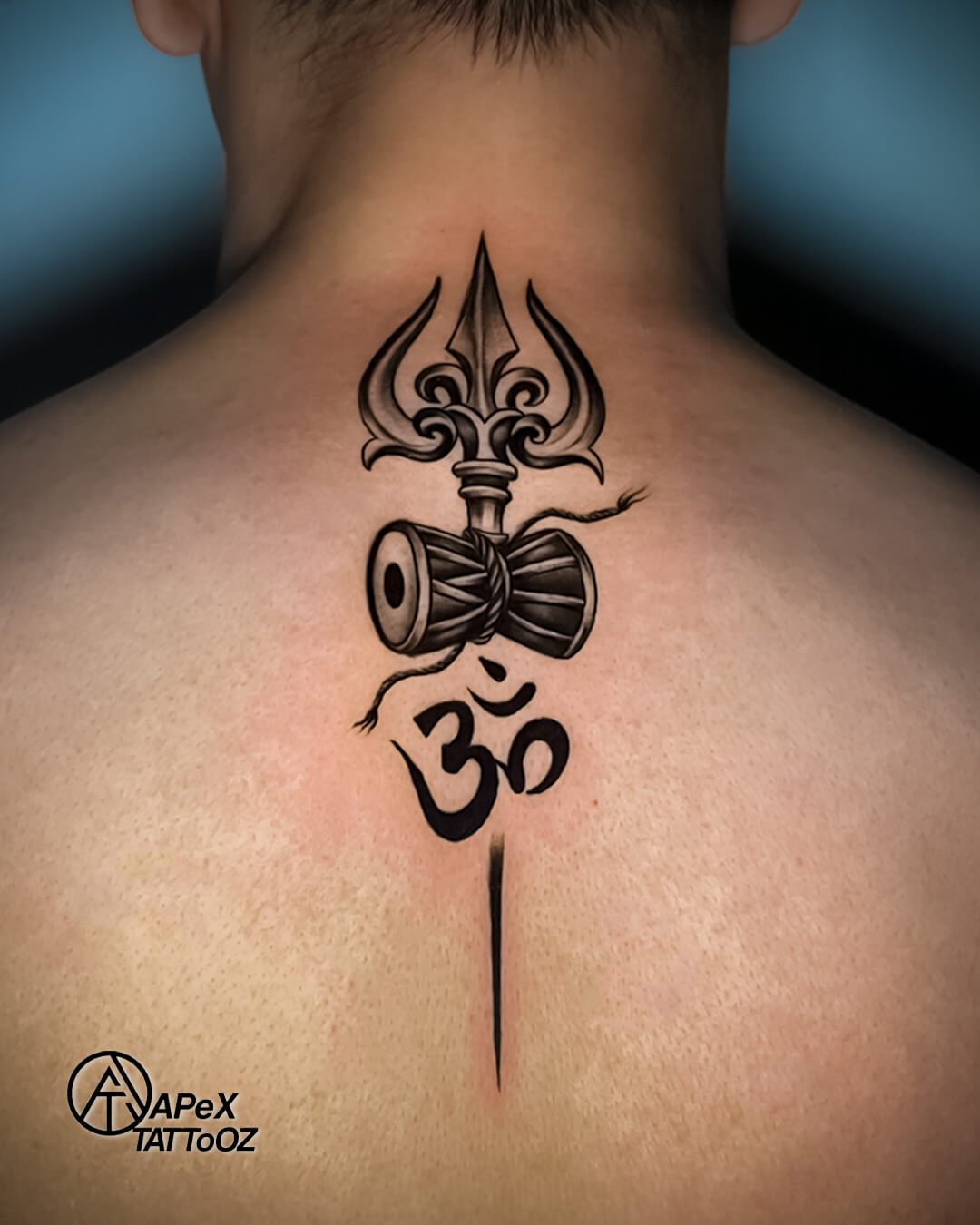
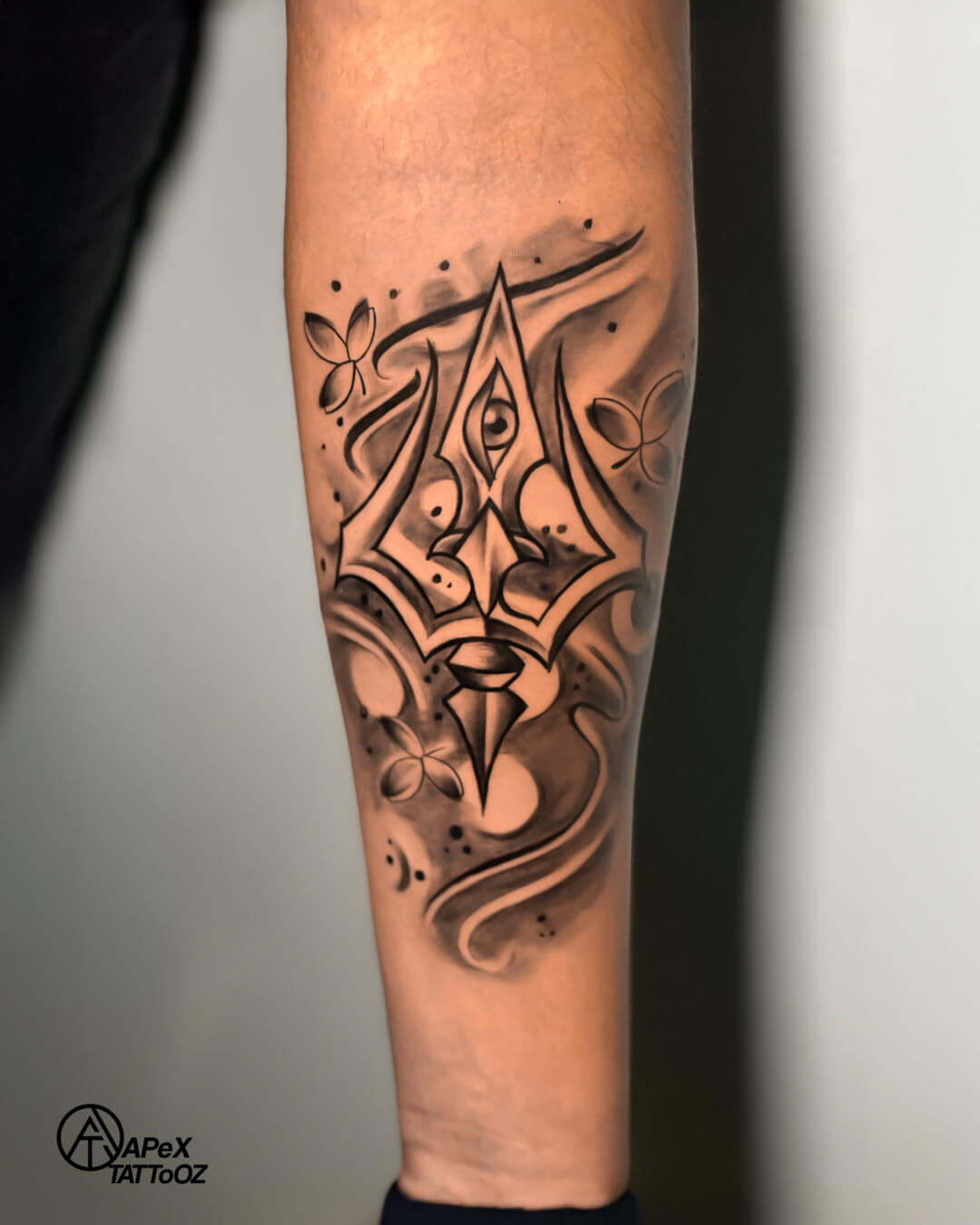
Can move from a quiet portrait to a narrative composition using mountains, Nandi, Parvati, the trishul, moon or Om.
Hanuman
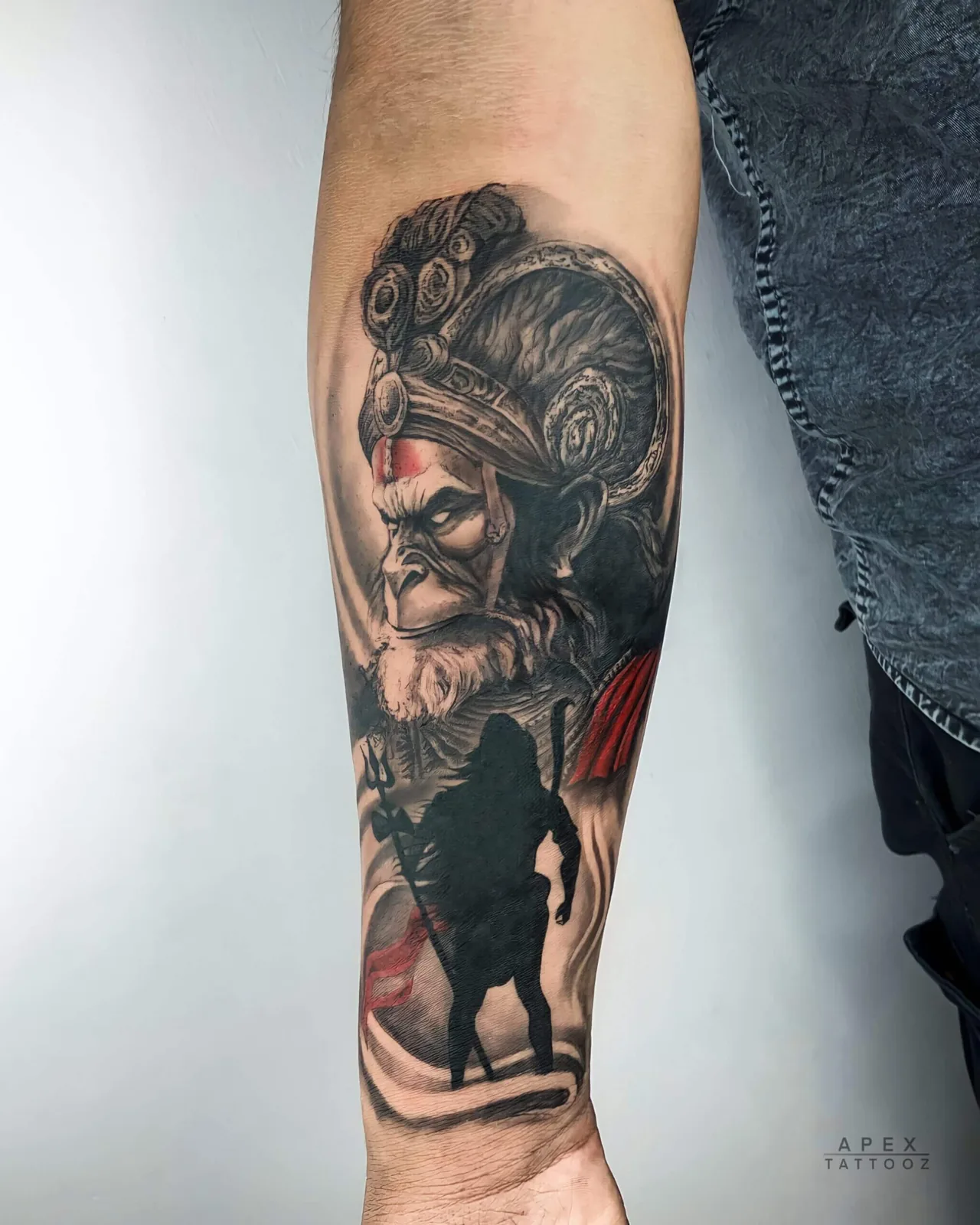
Expression and posture set the tone. A portrait needs different scale and contrast from a full narrative scene.
Kali or Durga
Strong eyes, weapons, animals and colour can create intensity, but the hierarchy must remain controlled and respectful.
If you are still comparing broader subjects and styles, use our guide to choosing a tattoo design. It helps separate the idea you like from the composition that will actually fit your body.
01–02 Ganesha tattoo ideas
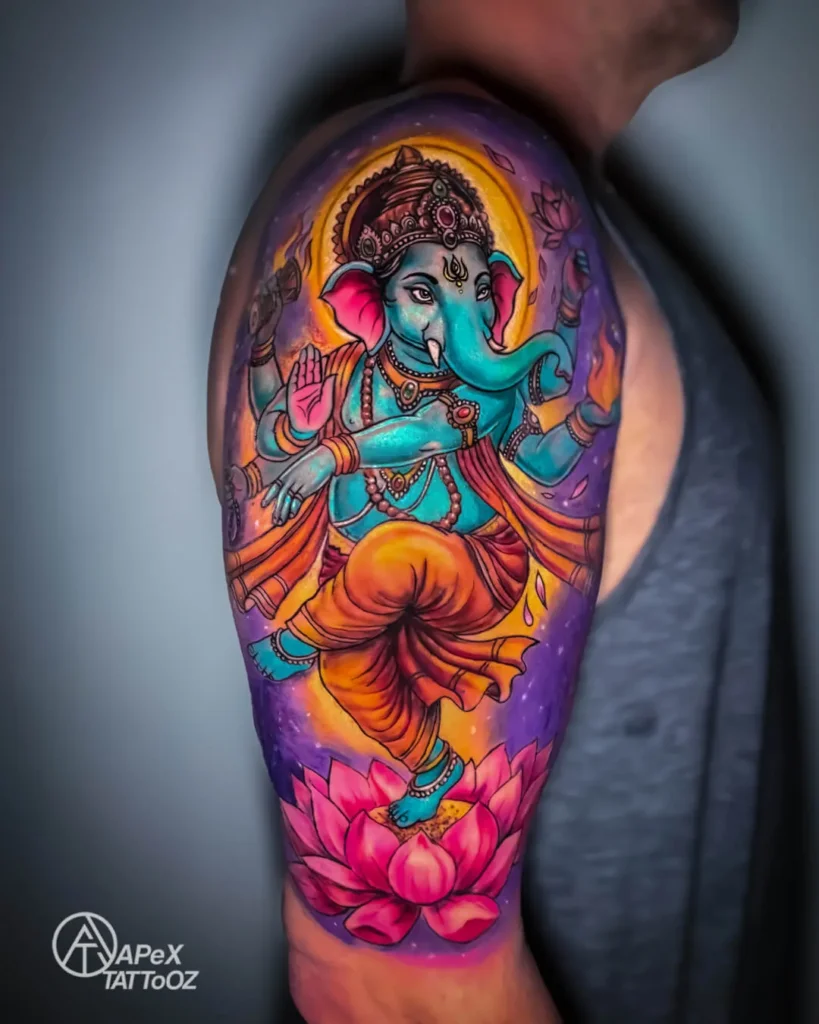
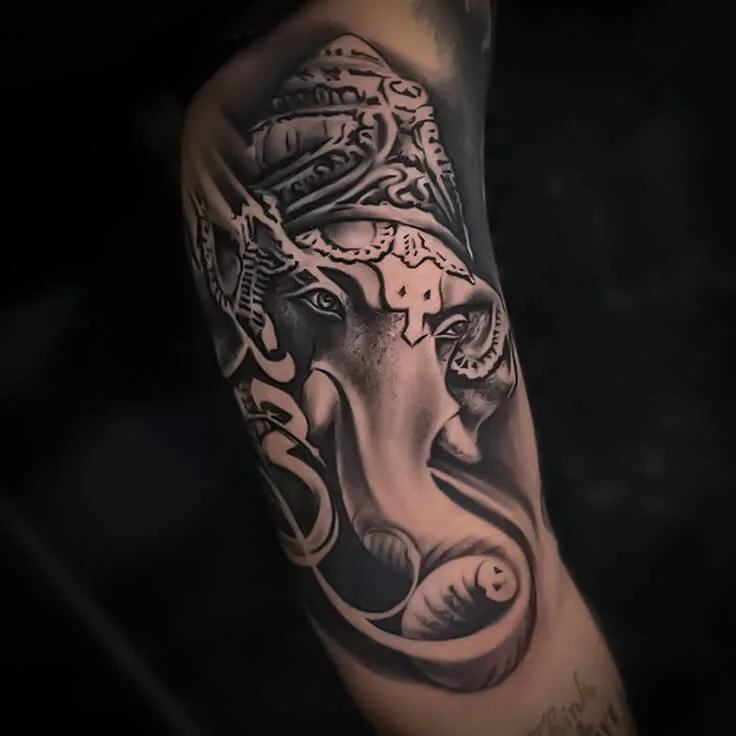
The colour Ganesha tattoo shown as this article’s featured image uses a tall upper-arm arrangement and saturated blue, orange and pink. The black-and-grey example below approaches the subject differently: the face and crown are compressed into a compact forearm portrait with ornamental shading around the focal features.
For either direction, the trunk, eyes and crown should be checked at the intended tattoo size. If the design is reduced, removing minor ornament often protects the recognisable structure better than shrinking every line.
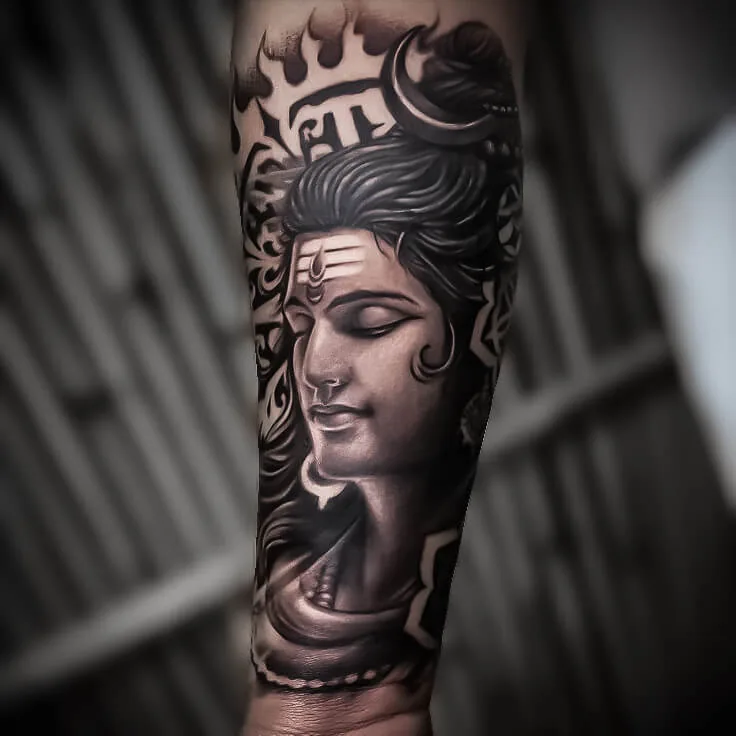
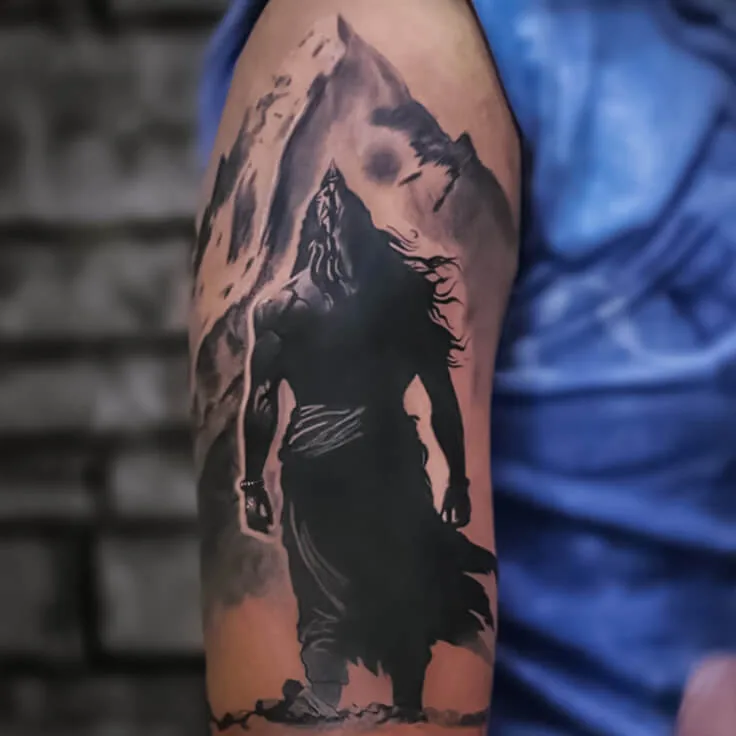
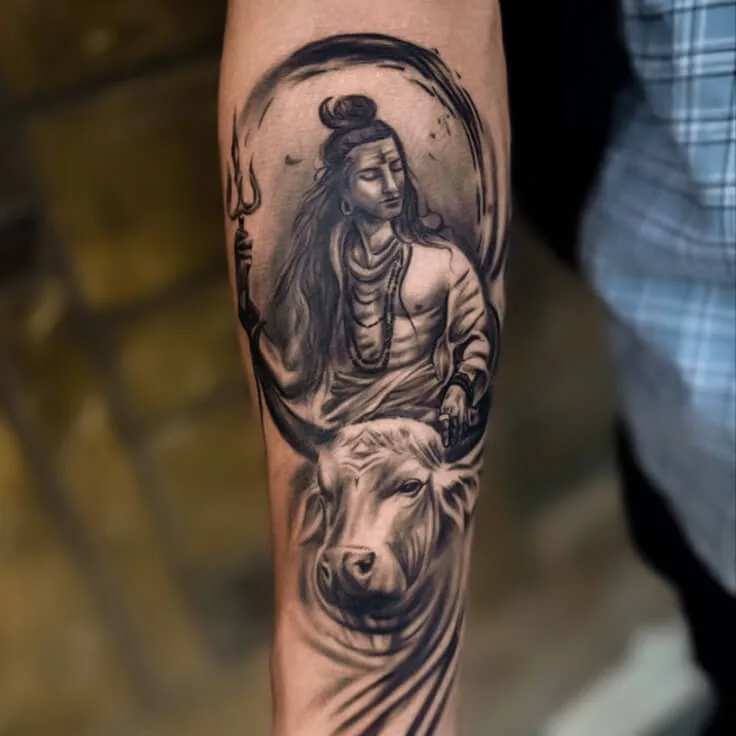
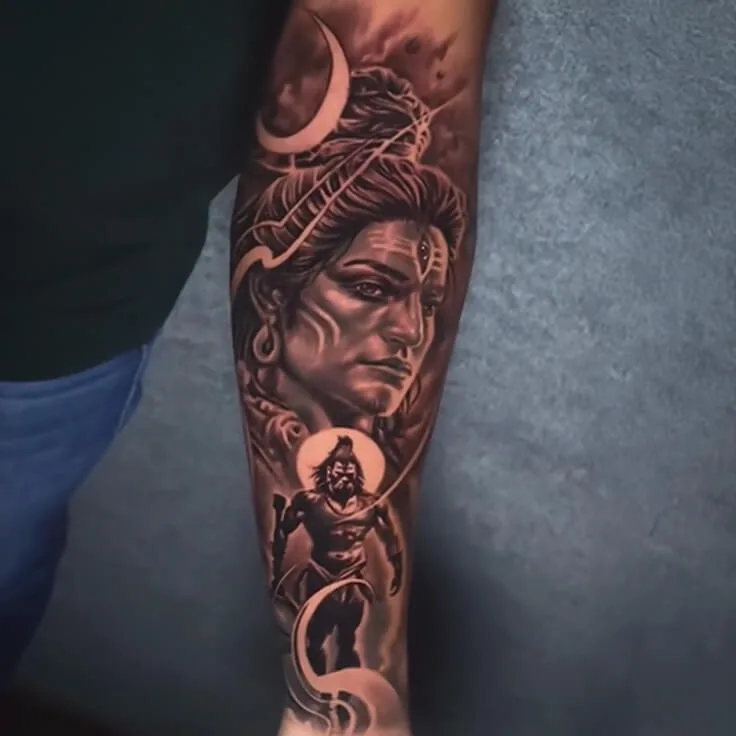
03–07 Shiva portraits and symbolic compositions
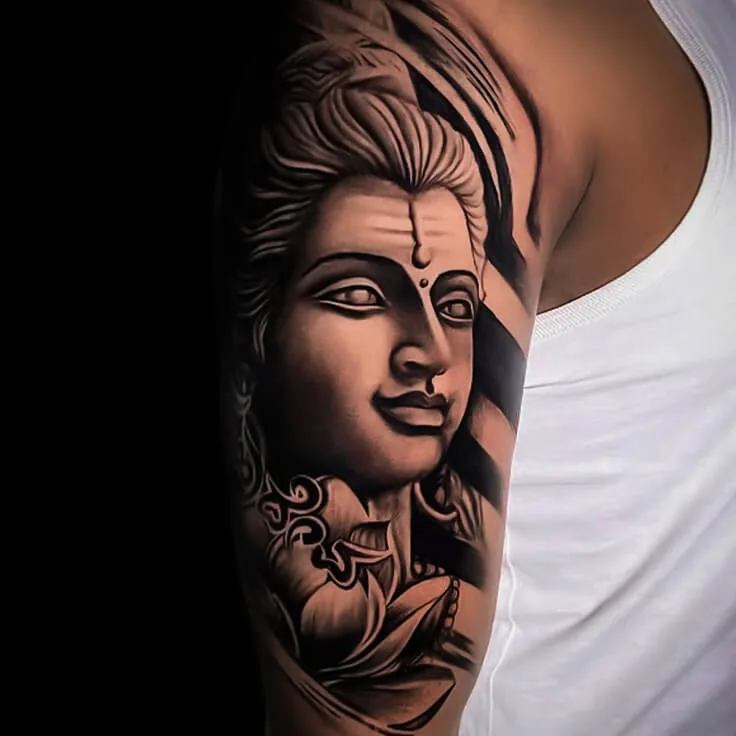
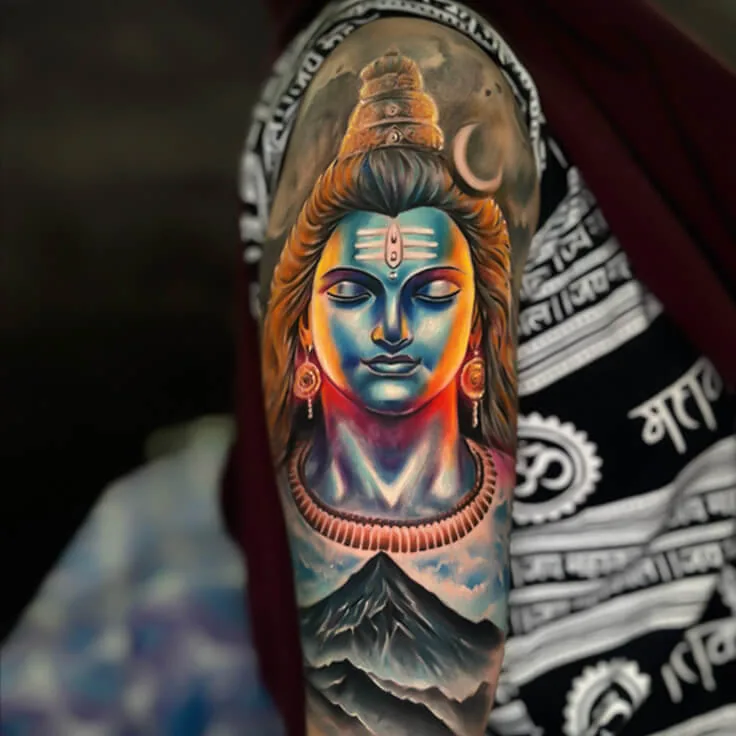
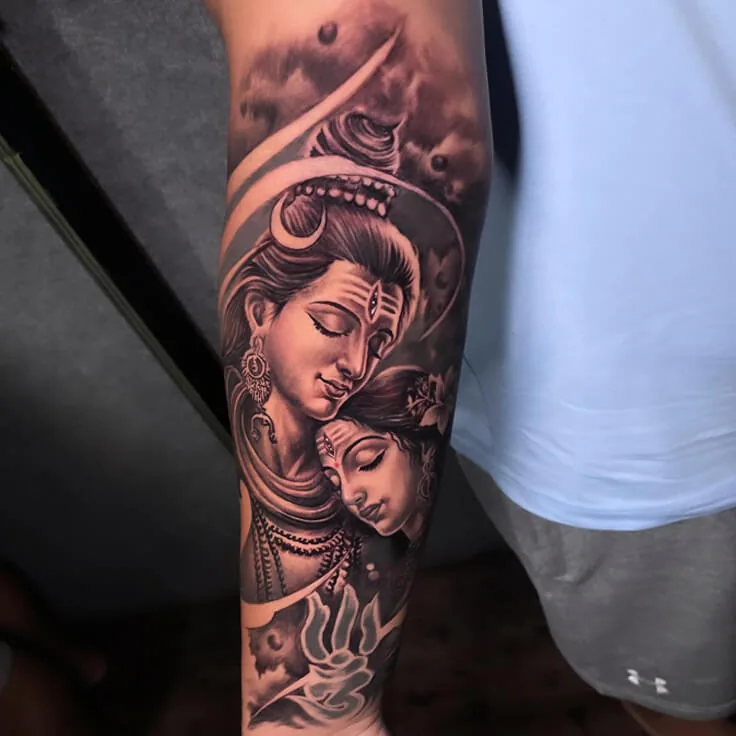
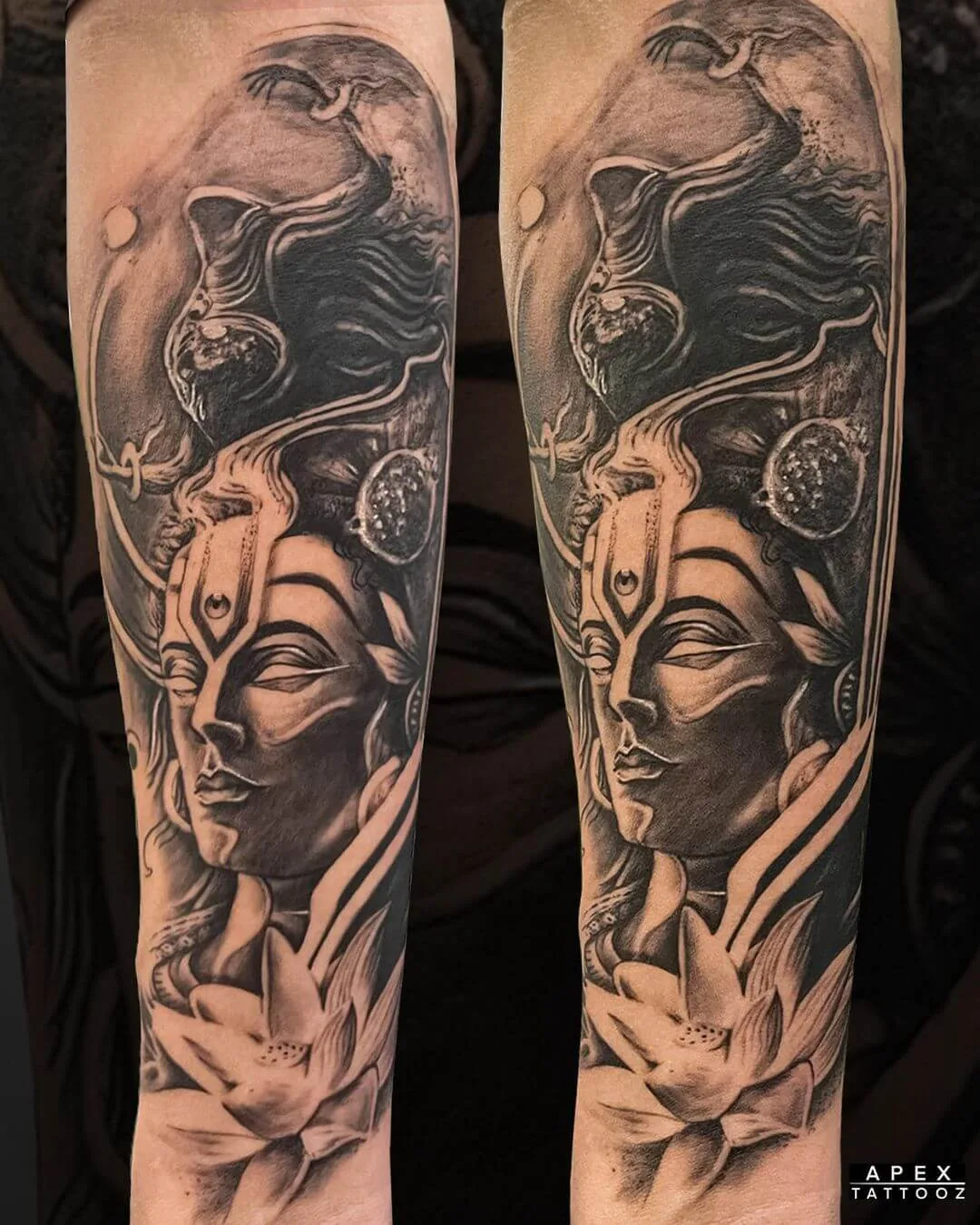
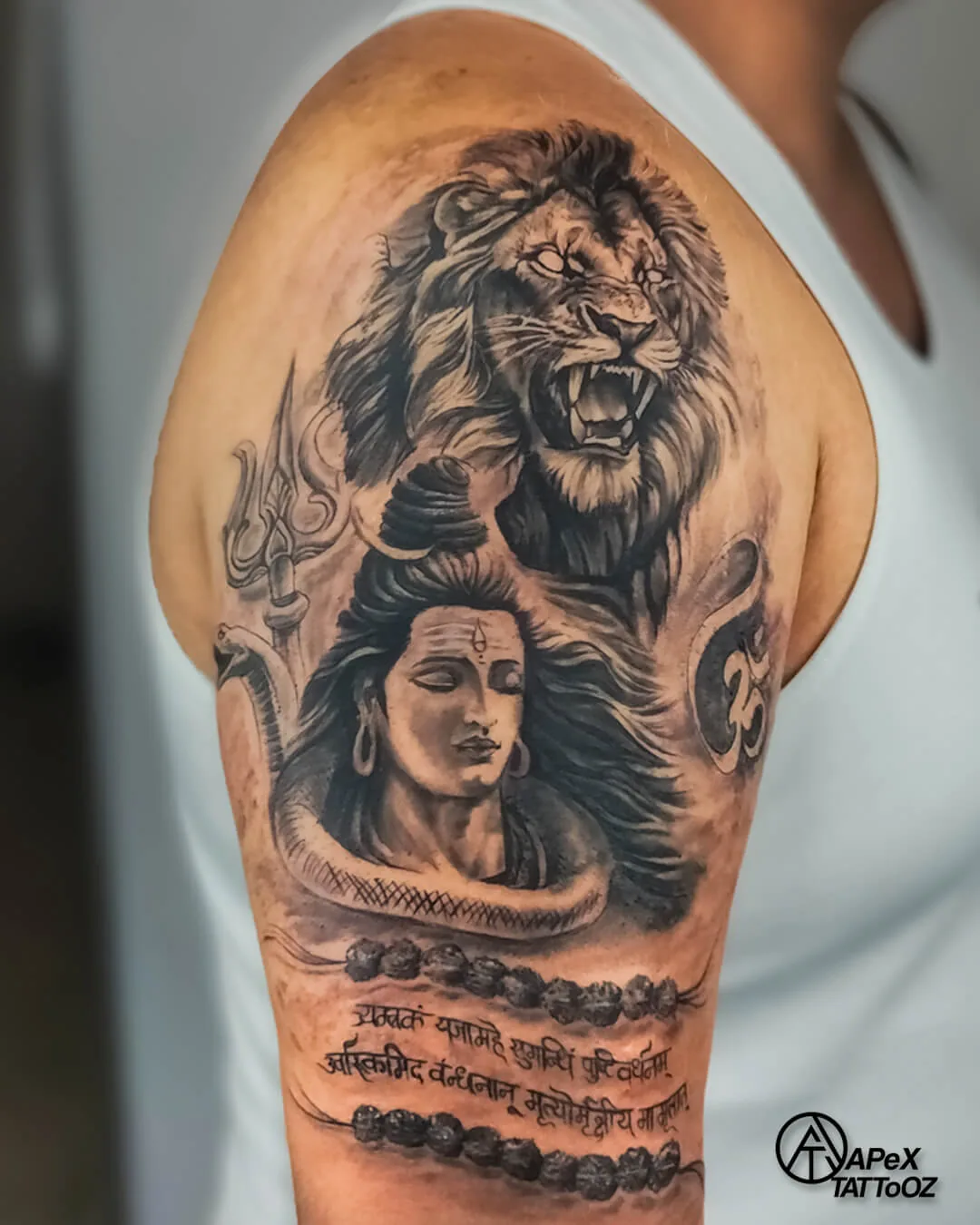
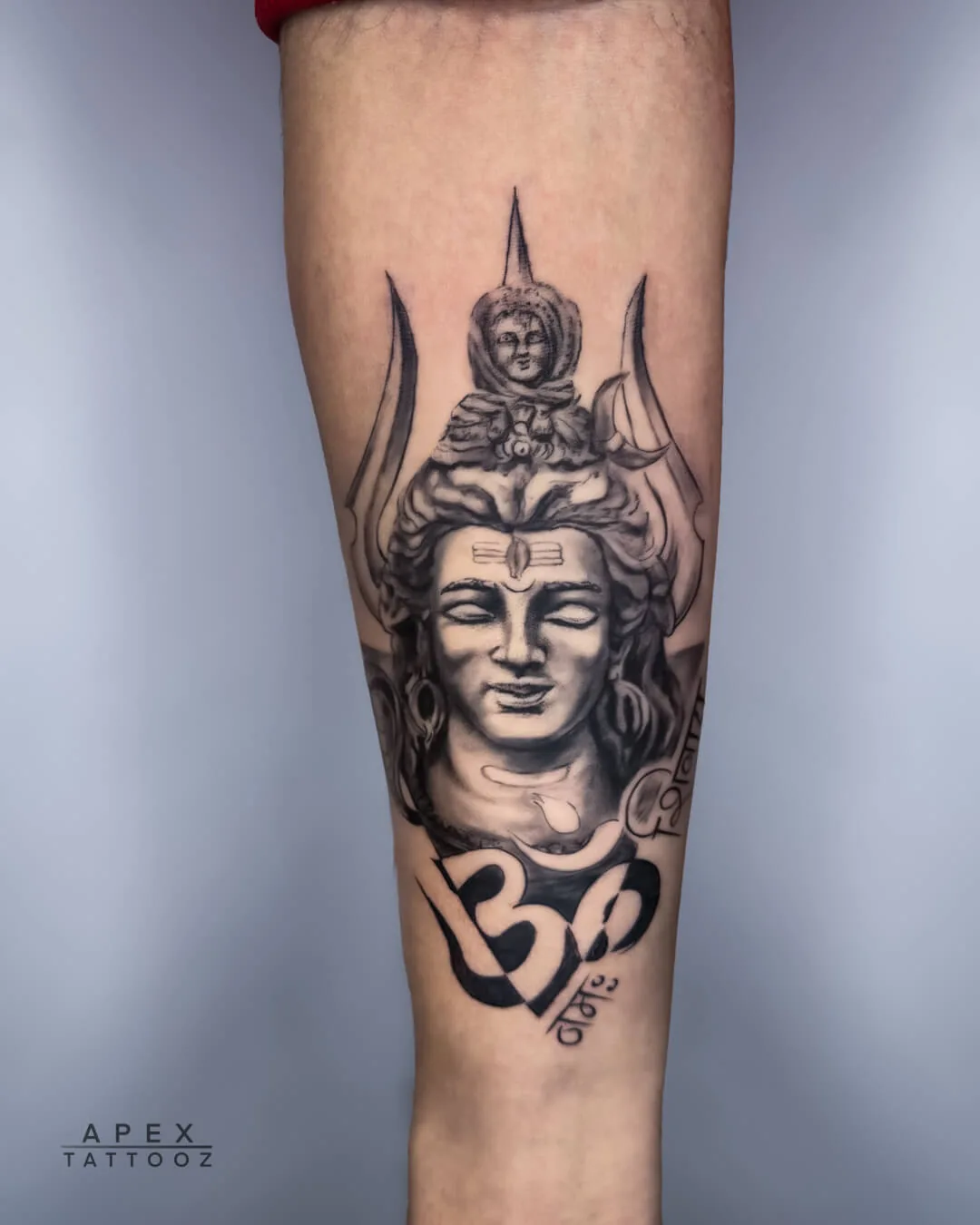
Shiva tattoo ideas can range from a single calm portrait to a landscape, silhouette or multi-subject story. The important decision is not how many symbols can fit. It is which element the eye should recognise first. Portrait-led work normally needs more room for expression, hair and tonal transitions; silhouette-led work can communicate with fewer marks and stronger negative space.
A dedicated subject page already owns deeper Shiva-specific search intent. For meanings, examples and subject-level planning, continue to our Lord Shiva tattoo guide. The examples here are included to compare composition choices across the larger mythology portfolio.
08–12 Colour, relationships and supporting symbols
Colour changes more than the mood. It can separate the subject from a background, guide the eye to the face and help a small accent carry more weight. Black and grey can create a quieter tonal hierarchy, while a combination such as Shiva and Parvati needs enough space for both faces to remain distinct.
Supporting symbols should never feel pasted around a completed portrait. The Om, tiger, moon, mountains or accompanying figure should be planned at the sketch stage so that line direction and contrast move through the whole tattoo.
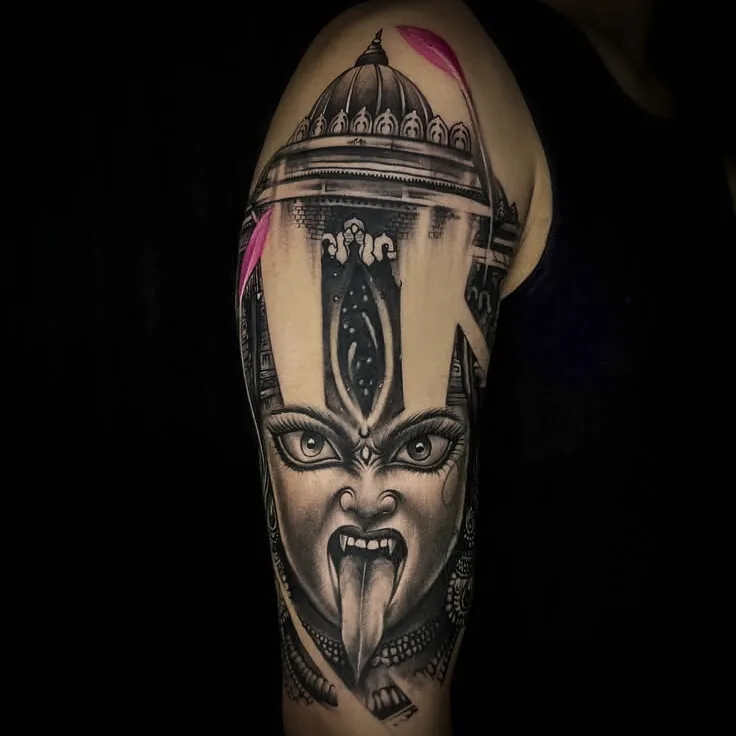
13–17 Kali and Durga tattoo directions
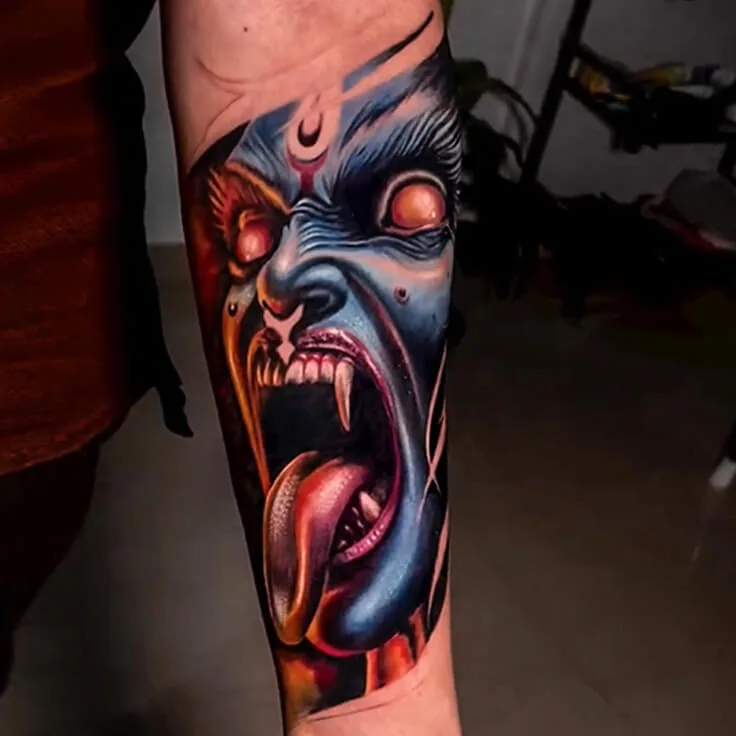
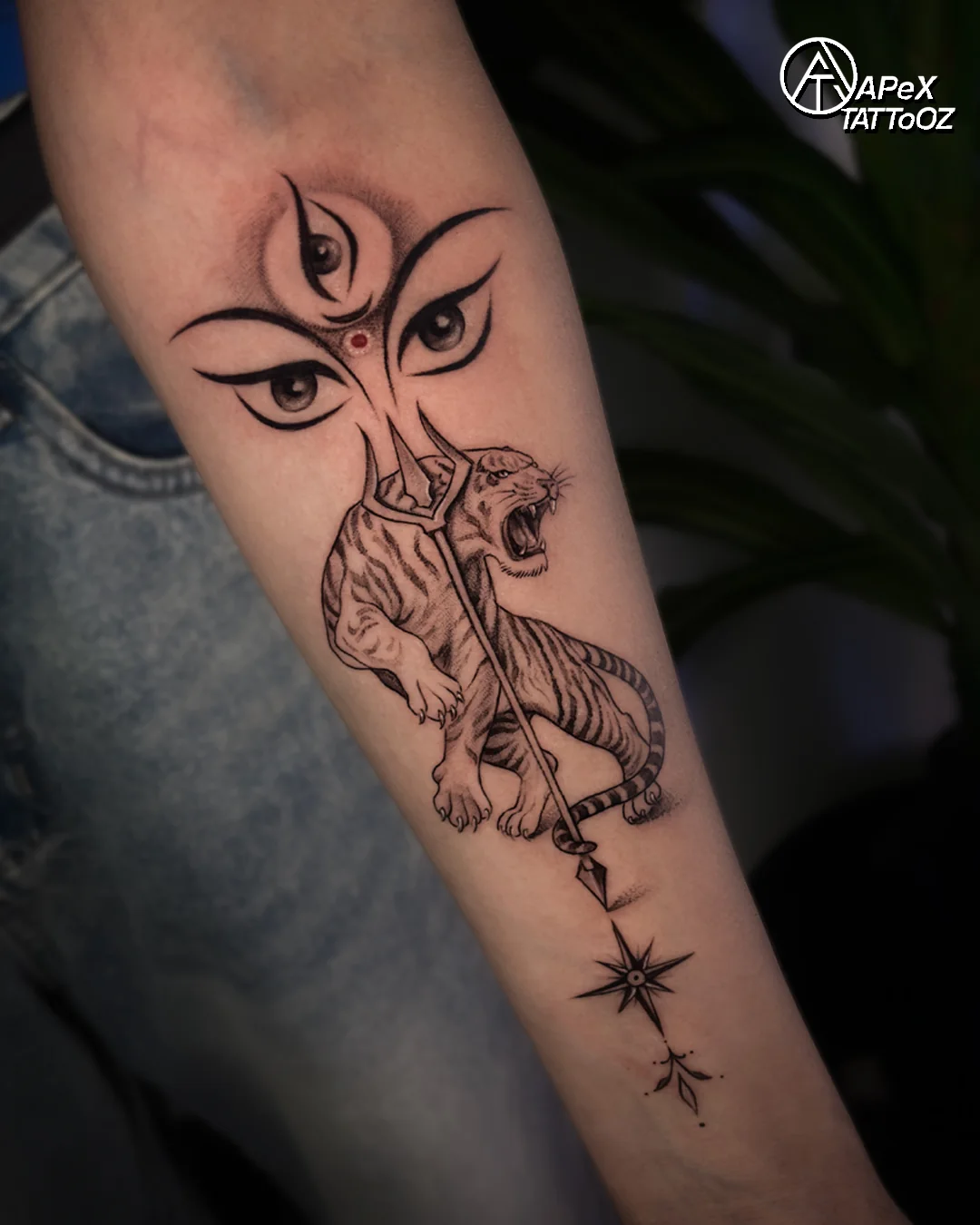
Kali- and Durga-inspired work often uses a direct gaze, strong contrast and recognisable attributes. Those elements can become visually crowded when every detail is equally dark or saturated. A better hierarchy lets the eyes or face lead, then reveals architectural framing, animals, weapons or ornament at the second look.
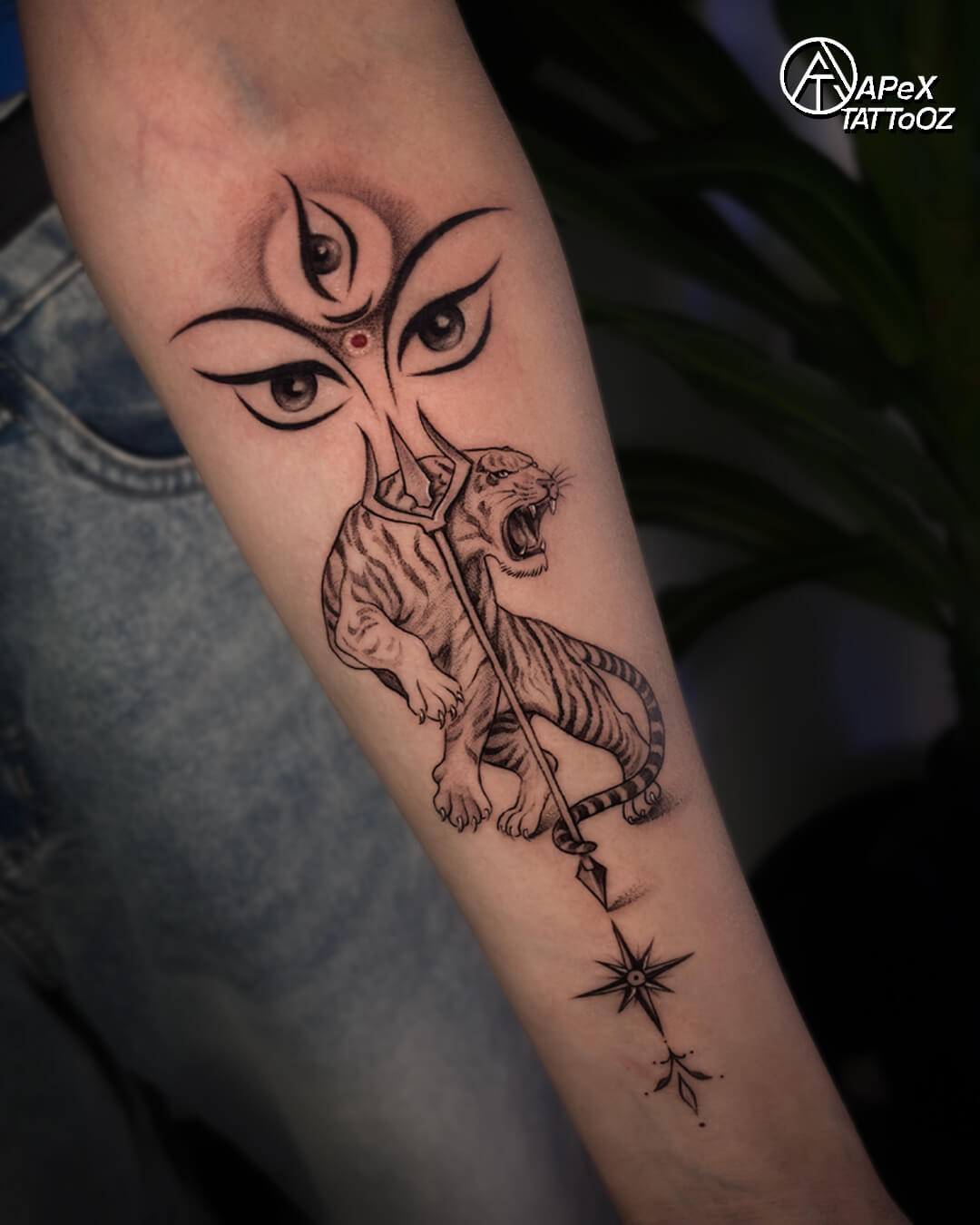
The Durga example combines the goddess’s eyes with a tiger and trishul. Its subject-level article explains that particular design in more depth: read the Durga tattoo meaning and forearm planning guide. As with every sacred subject, confirm the elements and interpretation that matter to you before approving the final drawing.
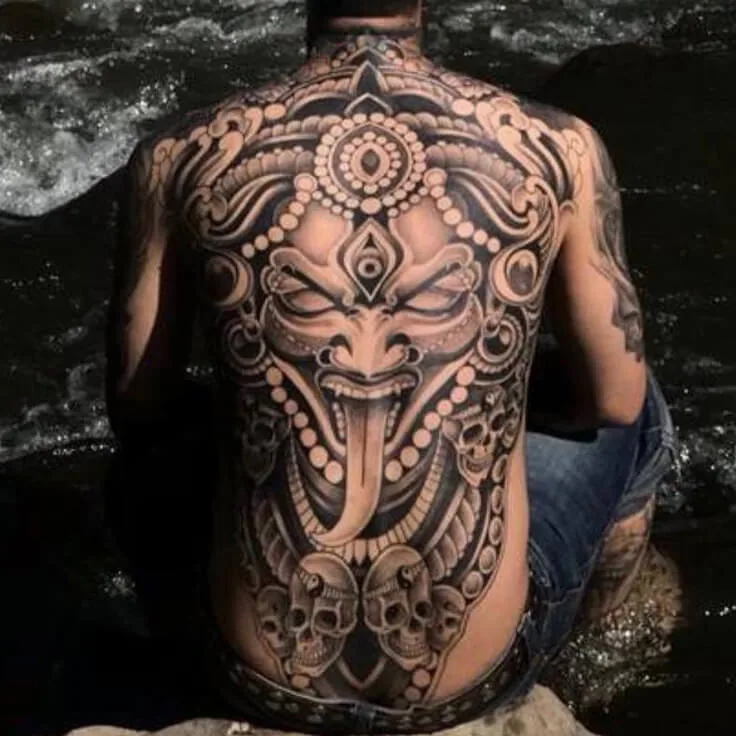
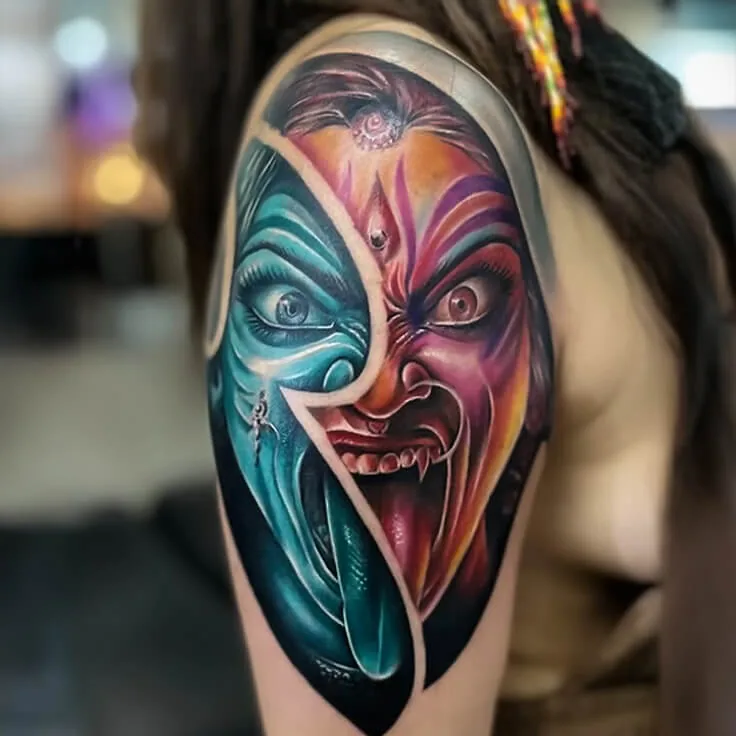
18–20 Krishna, Ravana and Hanuman
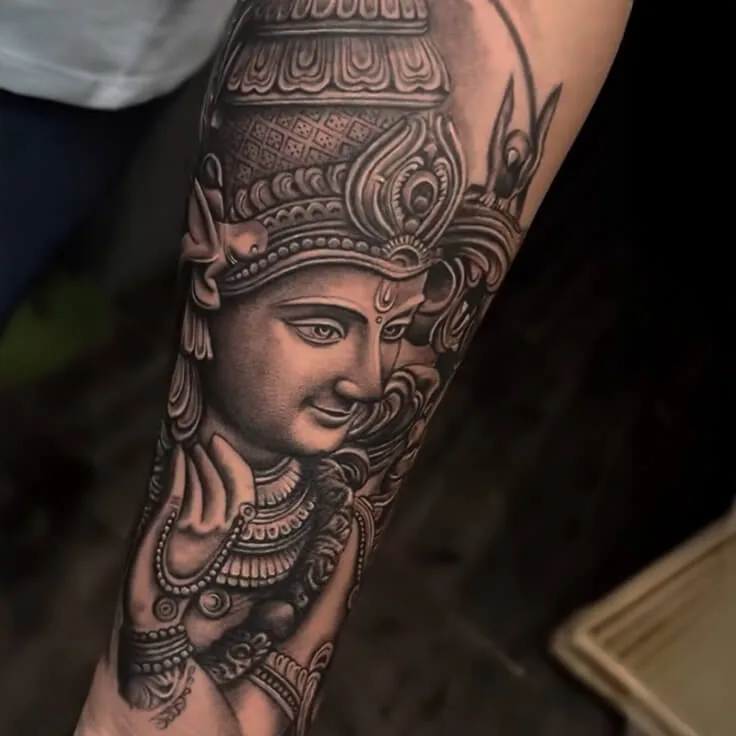
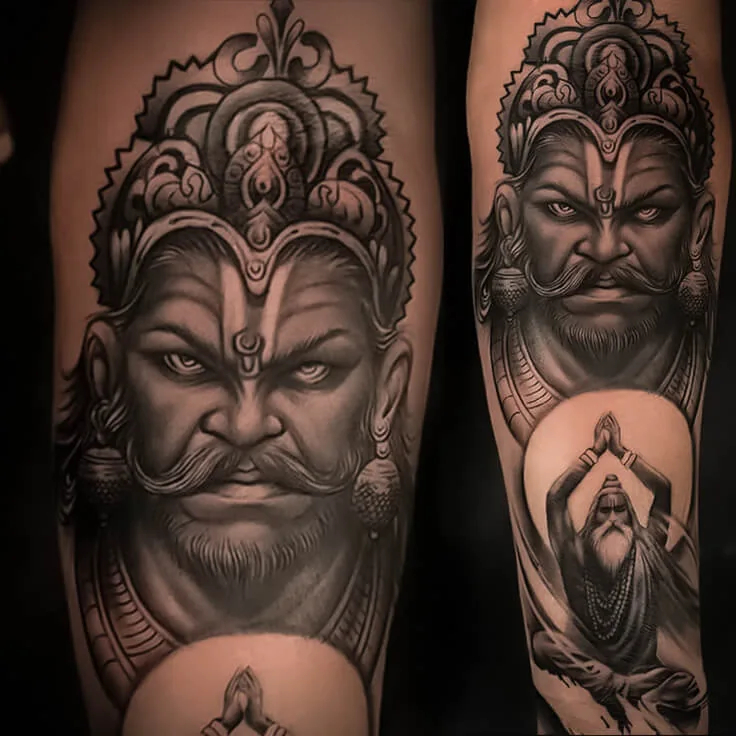
Mythological tattoo planning is not limited to one visual language. Krishna can be approached through flowing blackwork and ornamental line; Ravana through a multi-face narrative; Hanuman through a portrait with a focused expression. The right direction depends on what you want the tattoo to communicate and how much skin is available.
Complex subjects should not be miniaturised only to fit a preferred price or placement. If the essential faces, hands, weapons or script cannot remain clear, change the crop, simplify the scene or choose a larger body area. A consultation is most useful when it resolves those choices before detailed drawing begins.
Placement and scale decide how much detail survives
Forearms and upper arms suit many vertical portraits because the design can follow the length of the limb. The chest and back provide more room for paired subjects, scenery and full narrative work. A shoulder cap introduces curvature; the stencil must be checked from the front, side and relaxed arm position so that the face does not distort at the edge.
There is no single respectful placement rule that applies to every person, family or tradition. Some clients have strong preferences about where sacred imagery should sit. Decide that from your own beliefs and guidance first; then the studio can solve the practical questions of orientation, scale, movement and future expansion.
- Forearm: useful for a vertical portrait, but narrow areas limit very small facial and script details.
- Upper arm: provides more width and a natural frame for a face, crown or animal companion.
- Chest: can support symmetry, paired figures or a composition connected to the shoulder.
- Back: offers the largest narrative canvas for multiple subjects and ornamental structure.
- Calf or thigh: gives a tall field with enough width for a portrait and supporting elements.
- Future sleeve: preserve transition space if the tattoo may later connect above or below.
Black and grey, blackwork or colour?
Black-and-grey realism can support soft facial transitions and a restrained mood. Blackwork relies more on decisive shapes, negative space and line rhythm. Colour can create a different emotional intensity and separate the subject from its background, but it still needs a strong value structure underneath. Saturation alone cannot rescue an unclear composition.
Your references should explain what you like rather than dictate a copy. Mark the expression, framing, palette, level of ornament or symbol relationship you want to carry forward. Apex Tattooz can then develop a custom layout for your anatomy and scale. See how that process works on our custom tattoos in Delhi page, or browse the wider Apex tattoo gallery.
What to bring to a Hindu mythology tattoo consultation
A focused brief produces a better first drawing than a folder of unrelated screenshots. Bring the subject, the one or two stories or values that matter to your concept, the body area, an approximate size and a few references with notes. If the design includes a mantra or script, provide the exact approved text in a form that can be checked character by character.
- Your central subject: identify the figure or symbol that must lead the composition.
- Required elements: list only the animals, weapons, landscape or marks that are essential.
- Approved language: verify every name, mantra, character and line break before stencil day.
- Placement photos: share a clear, straight photograph of the intended body area in natural light.
- Actual size: measure the usable height and width instead of describing the tattoo as small or large.
- Style direction: choose the closest path—soft realism, higher-contrast blackwork or colour.
For general budget factors, read our tattoo price guide for Delhi. A final quote needs the selected placement, dimensions, detail and drawing requirements; two tattoos with the same subject can be very different projects.
Plan a mythology tattoo around your meaning and your body
Share the subject, placement, approximate size and references you connect with. Apex Tattooz will help turn them into an original composition with clear hierarchy, anatomical flow and space for the details that matter.
Frequently asked questions
Which Hindu mythology tattoo is right for me?
Start with the subject or story you genuinely connect with, then decide what must be visible in the design. A consultation can help translate that intent into a suitable crop, style, scale and body placement.
Can Apex Tattooz copy one of these exact designs?
These examples are better used to discuss direction. We recommend an original composition built around your body, references, subject relationship and preferred level of detail rather than copying another completed tattoo.
How small can a detailed god portrait tattoo be?
There is no useful universal size. The limit depends on the face, number of elements, line spacing, contrast and placement. If essential features become crowded at the requested dimensions, simplify the design or choose more space.
Can a Hindu mythology tattoo combine more than one figure?
Yes, when one focal point is chosen and every secondary element has a clear role. Paired or narrative compositions generally need more width or height than a single portrait.
Should I choose colour or black and grey?
Choose according to the expression, references and visual impact you want. Both can work well; the underlying hierarchy and readable structure matter more than the palette alone.
How should I verify a Sanskrit or Devanagari phrase?
Confirm the exact characters, spelling, punctuation and line breaks with a trusted language or religious source before the stencil is approved. The studio can check the visual placement, not establish the phrase’s authority for you.
How much does a Hindu mythology tattoo cost in Delhi?
Cost depends on dimensions, placement, style, detail, colour, drawing complexity and the scope of the project. Share those details for a relevant consultation rather than relying on a subject name alone.
Where can I see more Apex Tattooz work?
Use the Apex gallery for a broader portfolio, or visit our Delhi NCR studio page to understand the consultation route and studio experience before booking.