A portrait tattoo begins long before the first line is placed on skin. It begins with a photograph.
The expression, angle, lighting and quality of that photograph influence how clearly a face can be translated into a tattoo. A meaningful image may be emotionally perfect but technically difficult. A sharp photograph may contain excellent detail but show an expression that does not feel right. The strongest starting point combines emotional importance with visual clarity.
If you are planning a portrait tattoo from a photo, this guide will help you prepare better references, choose a suitable placement and have a more useful consultation with Apex Tattooz.
Why the reference photo matters
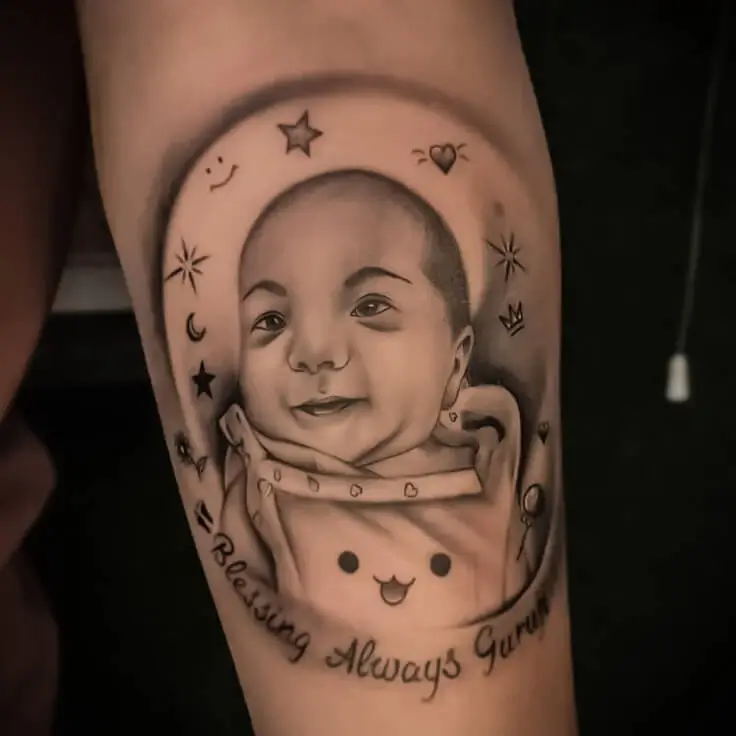
A portrait is recognised through relationships between small details: the distance between the eyes, the direction of the mouth, the shape of the nose, the hairline, shadows around the face and the expression captured at that moment.
When those details are visible, the composition can be planned with greater confidence. When the photograph is blurred, compressed or heavily filtered, important information may be missing. Enlarging the file does not recreate detail that was never recorded.
The objective is not simply to find the most attractive photograph. It is to find the image that best represents the person while providing enough information to build a readable tattoo.
What makes a strong portrait tattoo reference?
A clearly focused face
The eyes, eyebrows, nose, mouth and edges of the face should be reasonably sharp. Slight background blur is not a problem, but motion blur across the face can make an accurate interpretation difficult.
Whenever possible, send the original photograph rather than a screenshot downloaded from social media. Messaging platforms and repeated screenshots can reduce detail through compression.
Balanced lighting
Soft, even lighting usually reveals facial structure better than a photograph taken in harsh midday sun or a very dark room. Strong shadows can hide one eye, change the apparent shape of the nose or remove detail from the hair.
This does not mean every shadow should disappear. Shadows create depth. The important question is whether the photograph shows enough information to understand the face.
A natural expression
Choose an expression that feels emotionally honest. A quiet smile, a calm gaze or a familiar candid moment may carry more meaning than a formal pose.
Think about how you want the portrait to feel years from now. Peaceful, joyful, strong and reflective expressions create very different compositions even when the same person is shown.
A useful angle
A front-facing photograph gives clear facial symmetry. A three-quarter angle can feel more dimensional. A side profile can create a striking silhouette but provides less information about the opposite side of the face.
There is no universally correct angle. The right choice depends on the photograph, the placement and the character you want the portrait to preserve.
Photographs that may need extra planning
Some meaningful images are old, small or damaged. That does not automatically make them unusable, but expectations need to remain realistic.
Extra planning may be required when the reference has:
- very low resolution;
- strong blur or digital noise;
- beauty filters that change facial features;
- a face partly covered by hair, glasses, another person or an object;
- extreme light on one side and darkness on the other;
- a very small face inside a large group photograph;
- details that have already been lost through repeated screenshots.
Do not rely on an AI enlargement as the only source of truth. Enhancement tools can invent eyelashes, skin texture or facial edges that were not present in the original photograph. Bring the original file as well, so the design discussion can separate authentic detail from generated reconstruction.
Should you provide one photo or several?
Start with the photograph whose expression you want the tattoo to preserve. Then provide a small number of supporting images if they help explain details such as the hairline, eyes, facial structure or a feature hidden in the main reference.
Supporting photographs are useful for understanding the person. They should not be treated as permission to assemble a completely new face from unrelated angles. Combining different lighting, ages and expressions without a clear plan can reduce likeness rather than improve it.
A focused consultation helps establish which image is the primary reference and which images are only supporting material.
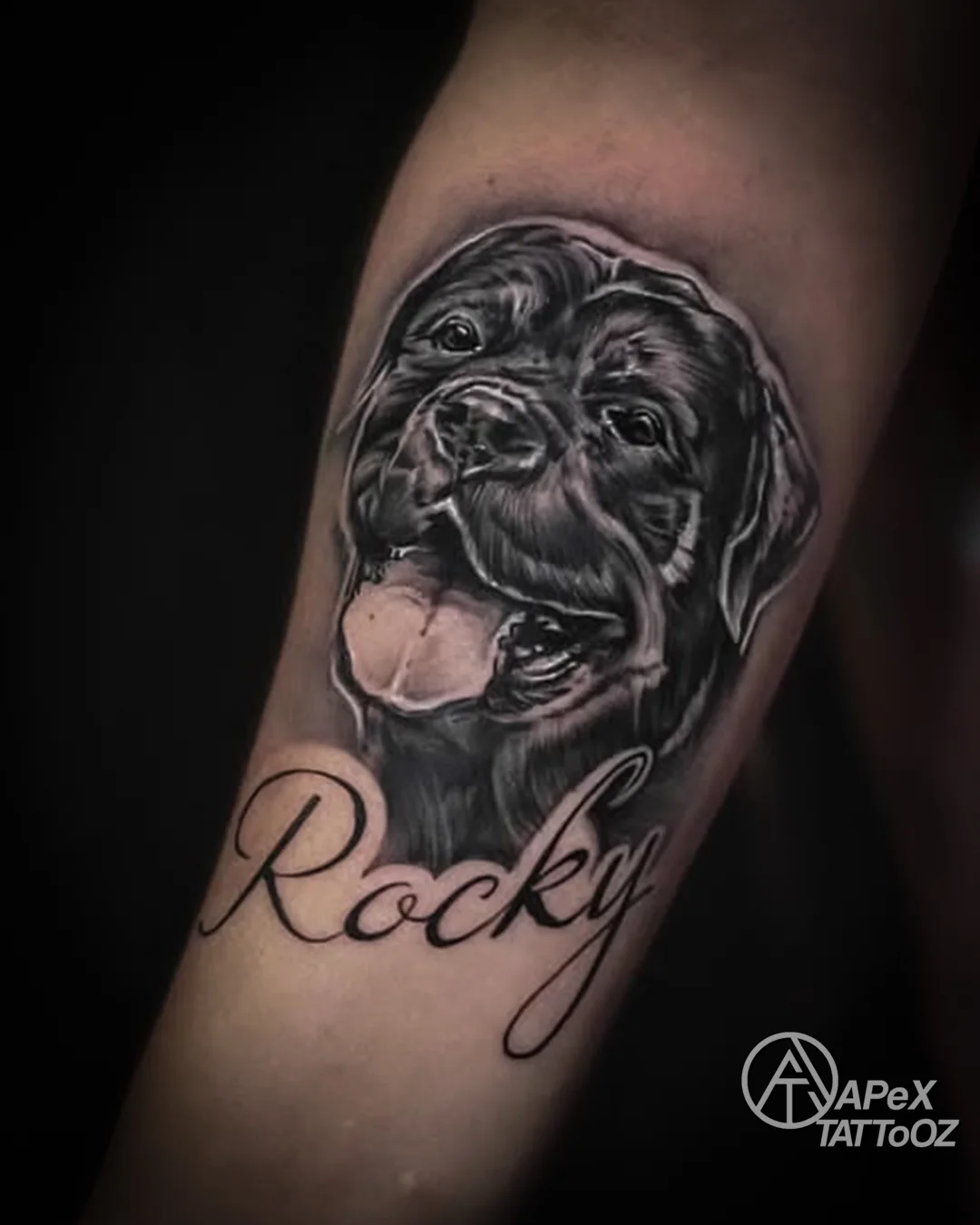
How size affects a portrait tattoo
Portraits depend on transitions, facial proportions and small areas of contrast. If the design is made too small, separate details can become crowded and lose clarity over time.
The appropriate size depends on:
- how much of the person will be included;
- whether the composition is a face, head-and-shoulders or larger scene;
- the amount of hair, clothing and background detail;
- whether the tattoo will be black and grey or colour;
- the body area and available shape;
- the level of contrast required for the face to remain readable.
Choosing a larger size is not about making the tattoo dramatic for its own sake. It gives important features enough room to remain distinct.
Choosing the placement
The body is not a flat canvas. A portrait should be designed for the direction, curve and movement of the chosen area.
Forearm
The forearm offers an accessible vertical surface and makes the portrait easy to view. Its taper and wrist movement need to be considered when positioning the face and any supporting elements.
Upper arm
The upper arm provides more width and can work well for a portrait with shoulders, clothing or a secondary element. The design should follow the roundness of the arm rather than appearing pasted onto one side.
Calf or thigh
These areas can provide useful scale for detailed vertical portraits. Clothing coverage, everyday visibility and the natural direction of the leg should be discussed before finalising the composition.
Chest or back
The chest and back allow more space for a portrait combined with dates, flowers, architecture or other meaningful elements. More space does not mean every possible symbol should be added. A clear hierarchy keeps the face as the focal point.
You can explore more placement and style examples in the Apex Tattooz gallery.
Black-and-grey or colour?
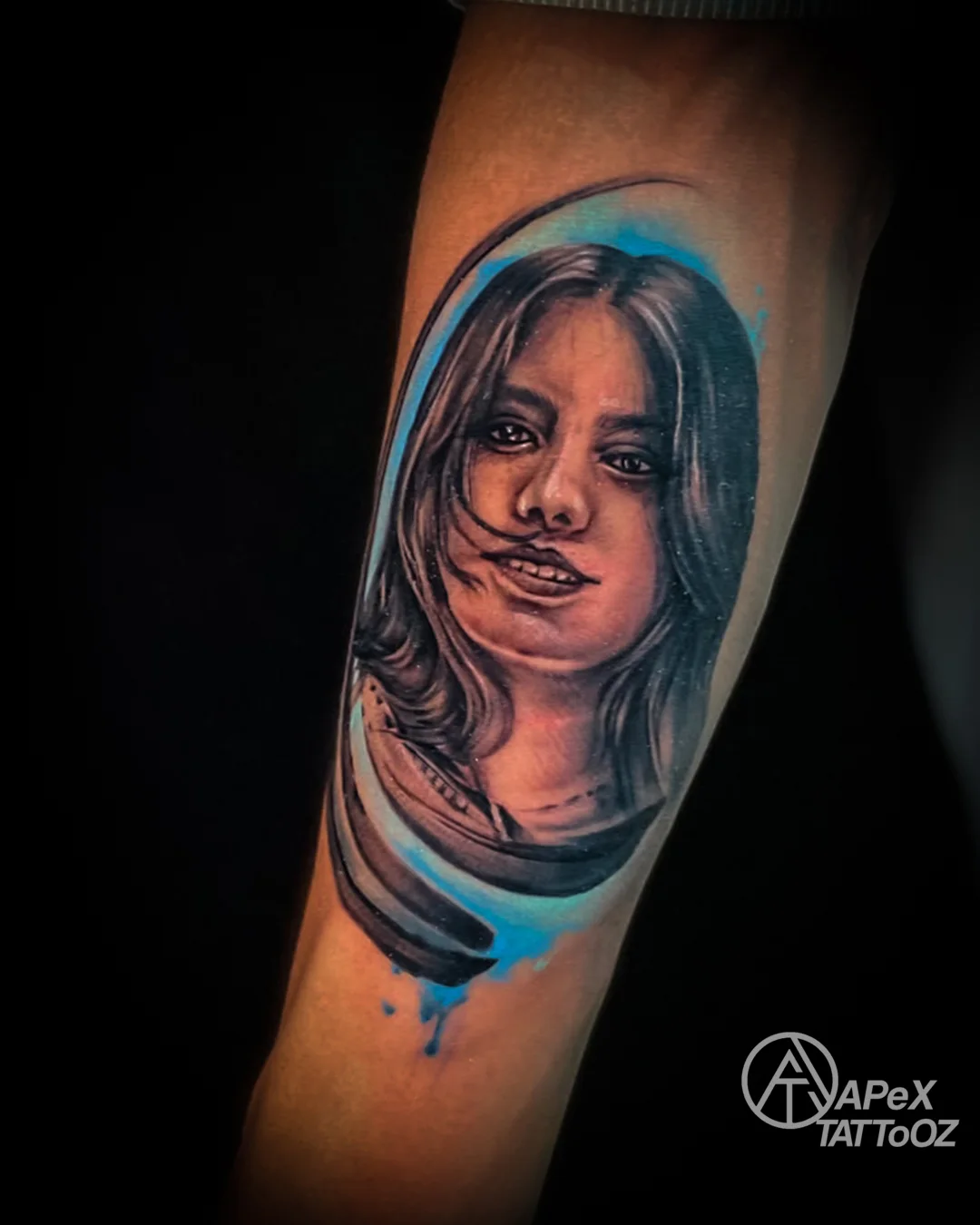
Black-and-grey portrait tattoos can create a focused, timeless composition through contrast and tonal transitions. Colour can preserve important clothing, cultural details or the atmosphere of the original photograph.
The choice should come from the reference and the intended feeling, not from a rule that one approach is always better. Skin tone, placement, size, surrounding tattoos and the quality of the colour information in the source photograph all influence the decision.
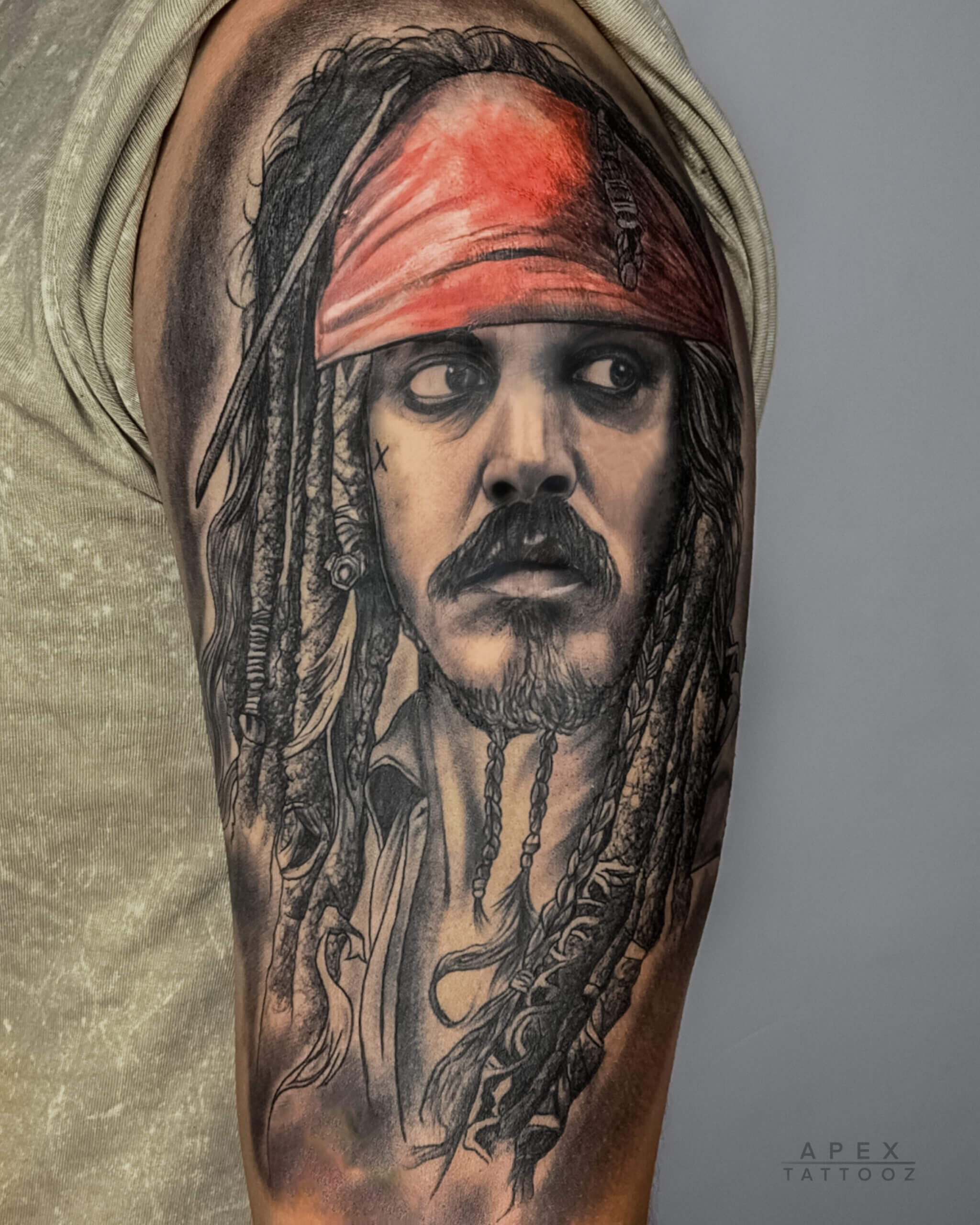
Adding names, dates or symbols
A portrait may be combined with a name, date, handwritten note, flower, object or background element. Every addition should support the portrait rather than compete with the face.
Before adding a symbol, ask:
- Does it have a genuine connection to the person or memory?
- Will it remain readable at the planned size?
- Does it improve the composition or simply fill space?
- Should it be prominent, secondary or almost hidden?
The most personal design is not always the one containing the most elements. Restraint can give the important details more emotional weight.
What to share during your Apex Tattooz consultation
For a more useful portrait tattoo discussion, send:
- the original high-resolution photograph;
- two or three supporting photographs when genuinely helpful;
- the body placement you are considering;
- an approximate size or a clear photograph of the body area for scale;
- whether you prefer black-and-grey or colour;
- any name, date, handwriting or symbol being considered;
- examples that show the mood or composition you like.
You do not need to arrive with every decision completed. The purpose of a consultation is to understand the reference, identify limitations and shape the idea around your body and priorities.
If this is your first tattoo, read the Apex Tattooz first-tattoo preparation guide before your appointment.
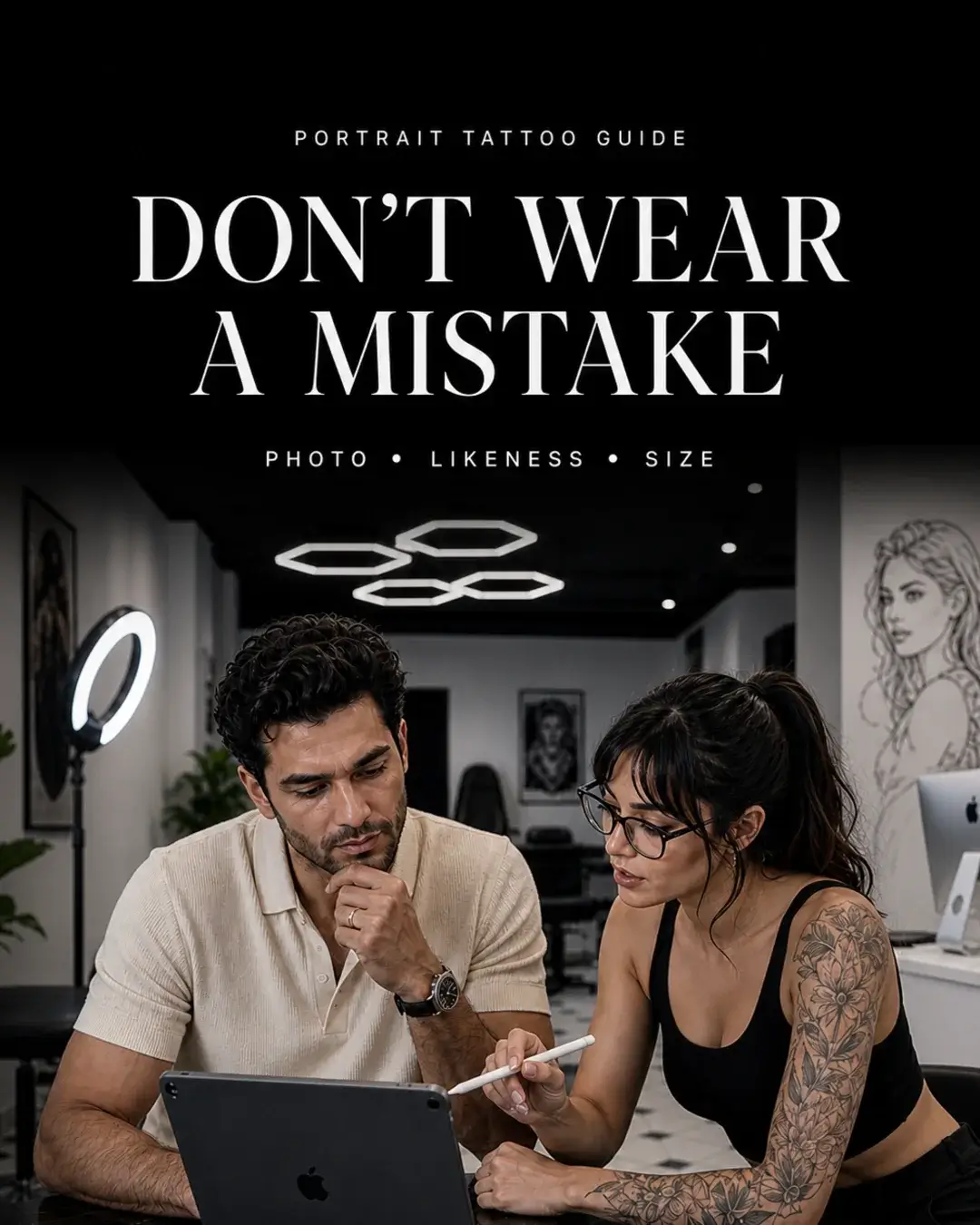
What affects the price of a portrait tattoo?
Portrait pricing cannot be judged from the subject alone. Size, detail, placement, colour, surrounding elements and the preparation required for the reference all influence the scope of the work.
Instead of reducing the idea to a fixed per-inch figure, begin with a clear reference and placement. The Apex Tattooz price guide explains the main factors considered when discussing an estimate.
Questions to ask before finalising the design
- Which photograph will be treated as the primary reference?
- Is the face clear enough for the planned size?
- Which details are essential to the person’s identity?
- Does the placement provide enough space for the composition?
- Will any text or symbolism distract from the portrait?
- Is black-and-grey or colour better supported by the reference?
- What should be simplified so the portrait remains readable?
These questions are more useful than asking for an exact copy before the reference and placement have been evaluated.
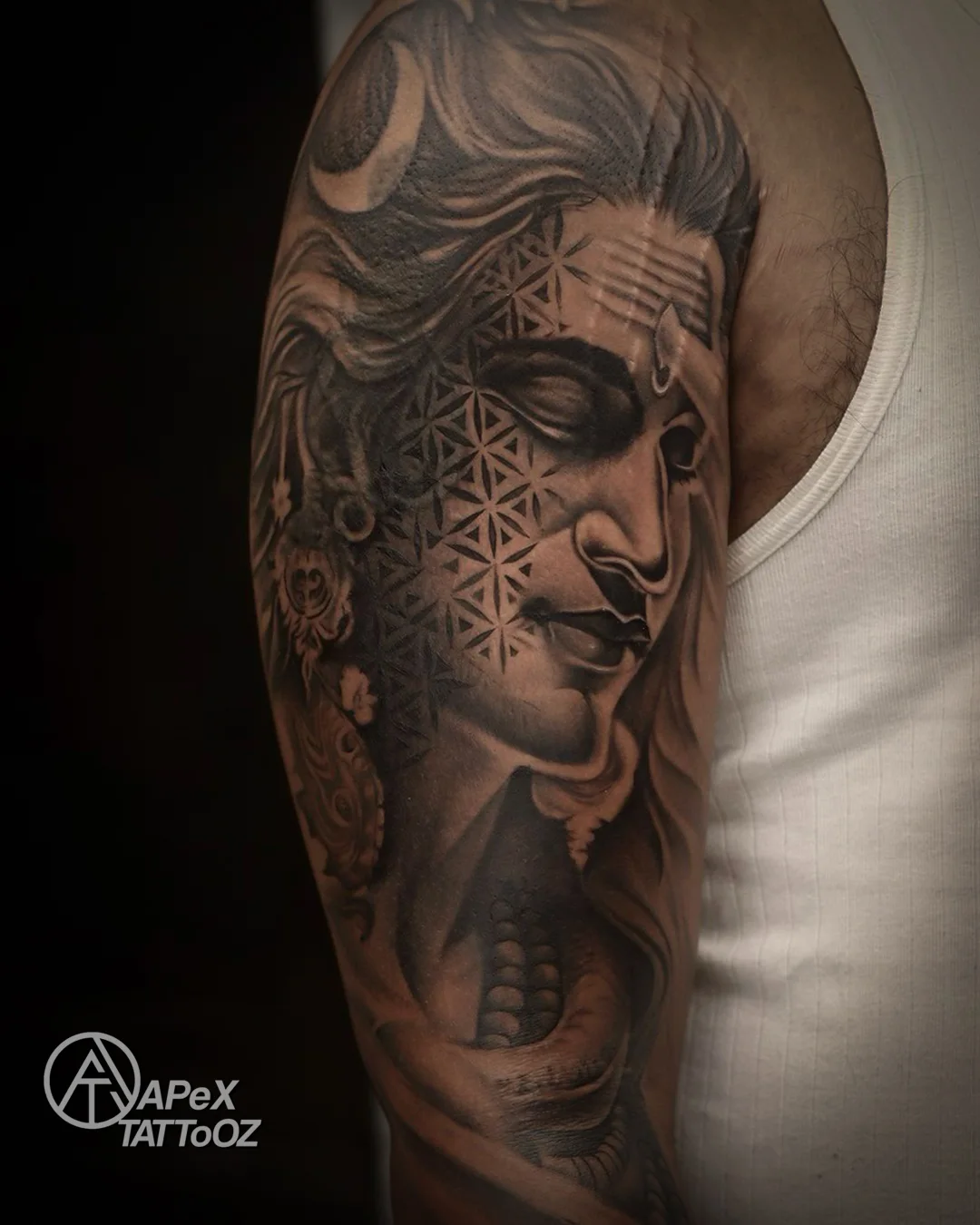
Plan your portrait tattoo with Apex Tattooz
A meaningful portrait deserves careful preparation. Share the original photograph, the placement you are considering and the feeling you want the tattoo to preserve. Apex Tattooz can help you evaluate the reference and develop a composition suited to your body.
Explore the studio’s tattoo services or start a tattoo consultation.
Frequently asked questions
Can an old photograph be used for a portrait tattoo?
Possibly. The photograph should first be assessed for facial clarity, lighting and missing detail. Supporting photographs may help, but they should not replace the original source.
Can several photographs be combined?
Several photographs can provide supporting information, but one image should normally establish the main expression and angle. Combining unrelated facial features without a clear hierarchy can weaken likeness.
Can a portrait tattoo be made very small?
Portraits need enough space for facial proportions and tonal separation. The minimum sensible size depends on the detail in the reference, placement and composition.
Should I choose black-and-grey or colour?
Choose the approach that best serves the reference and desired mood. The photograph, skin, placement, size and surrounding work should all be considered.
What should I send before booking a consultation?
Send the original photograph, useful supporting images, preferred placement, approximate size and any meaningful text or symbols you are considering.