Two tattoos can run from near the elbow towards the wrist and still feel completely different. One leaves plenty of skin visible between fine lines; another builds a continuous image with deep shading. Before choosing a forearm tattoo design, decide how much of your arm you want the artwork to occupy, not only which subject you like.
These thirteen photographs show different projects from the Apex Tattooz portfolio in Delhi. Compare the shapes, the space around them and the way each design finishes towards the wrist. They are examples to discuss, not designs you have to copy.
Start with the space around the tattoo
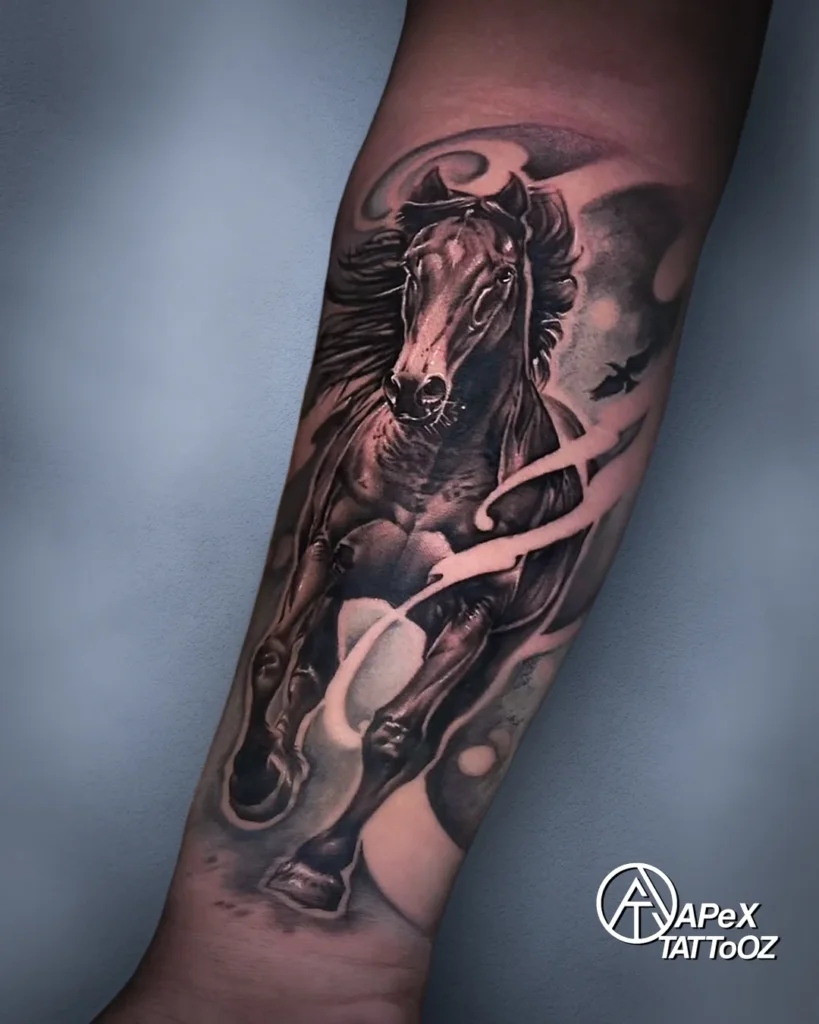
Look at the horse in the opening photograph. Its head, body and extended legs make a long composition, but pale, curved bands break up the darker areas. The horse has room to move visually because those gaps remain part of the picture.
Now think about how you want your own forearm to look from a few steps away. Would you prefer a few separate marks, a long drawing with skin showing between its elements, or a more continuous shaded piece? That decision changes the brief even before you choose a dragon, portrait or symbol.
Open linework or a fuller composition?

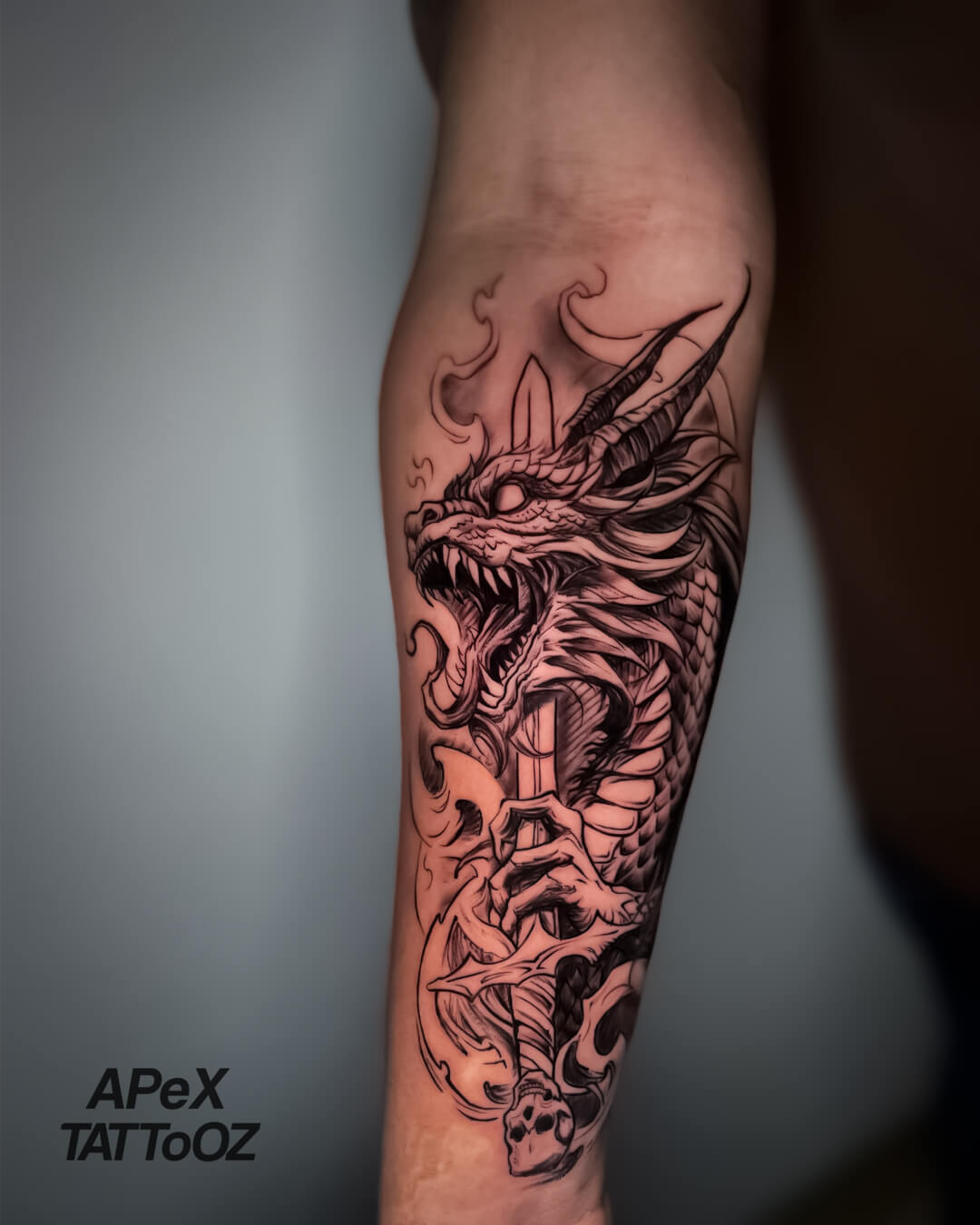
Compare the outer edges, not just the detail in the middle. In the linework example, individual marks stop and restart. In the dragon, the shapes overlap and continue along the arm. If you want a lighter-looking composition, say that explicitly; asking for a smaller copy of a dense drawing may not give you the same effect.
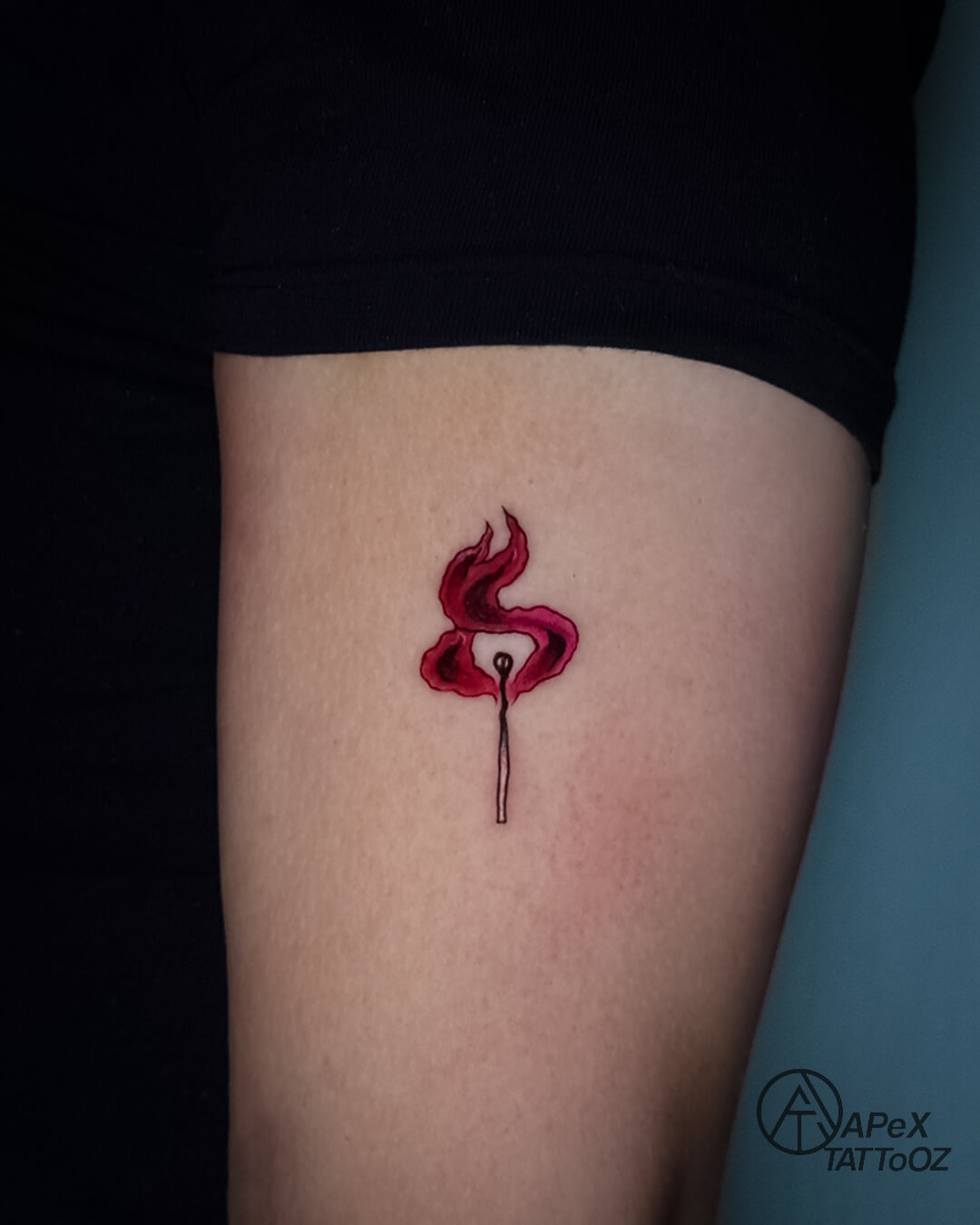
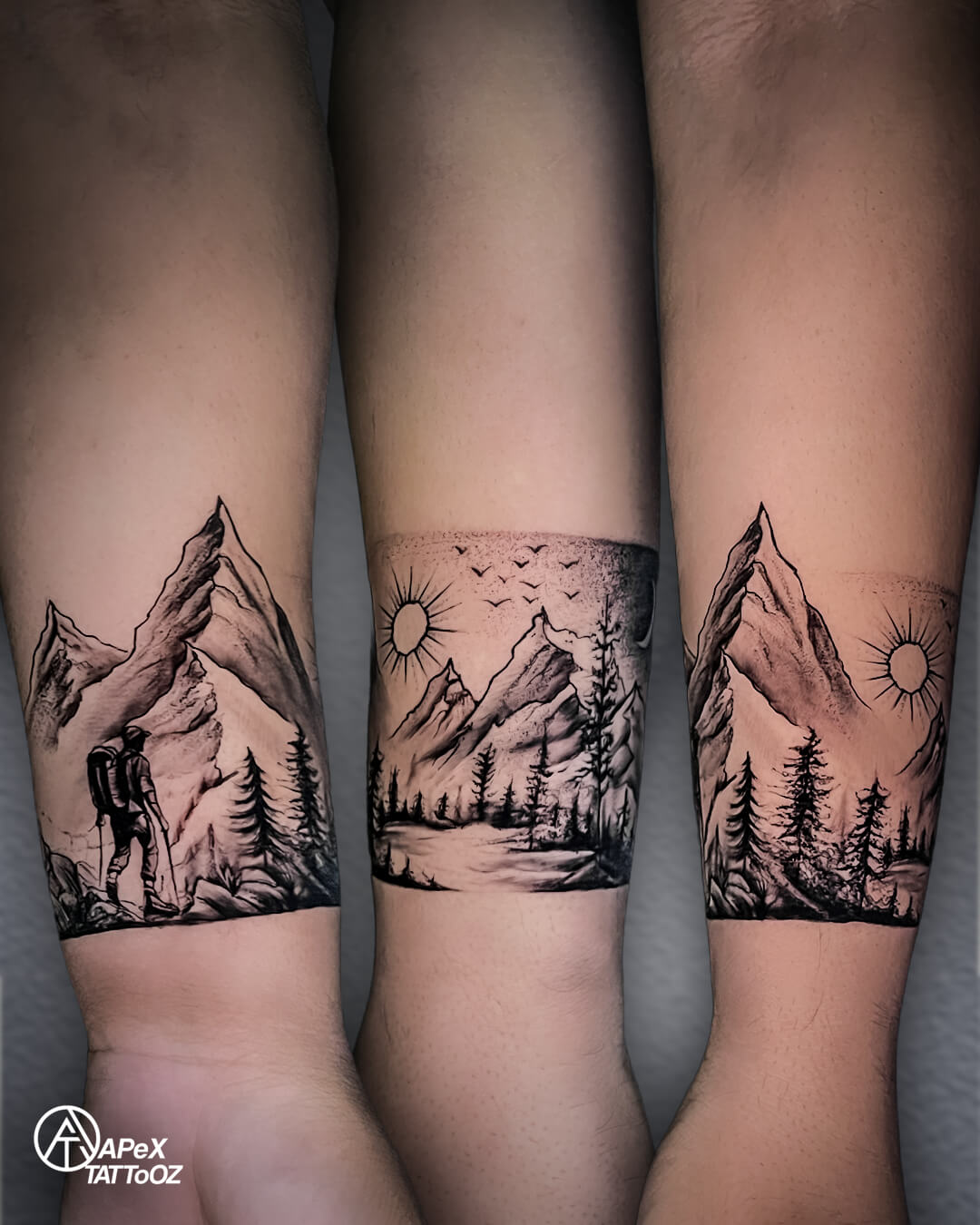
For a small forearm tattoo, start with one element that can stand on its own. A short word, an outline or one symbol is a different design task from shrinking an entire clock-and-mountain arrangement. Your available height and width should guide how much belongs in the drawing.
A single symbol or a larger devotional scene?
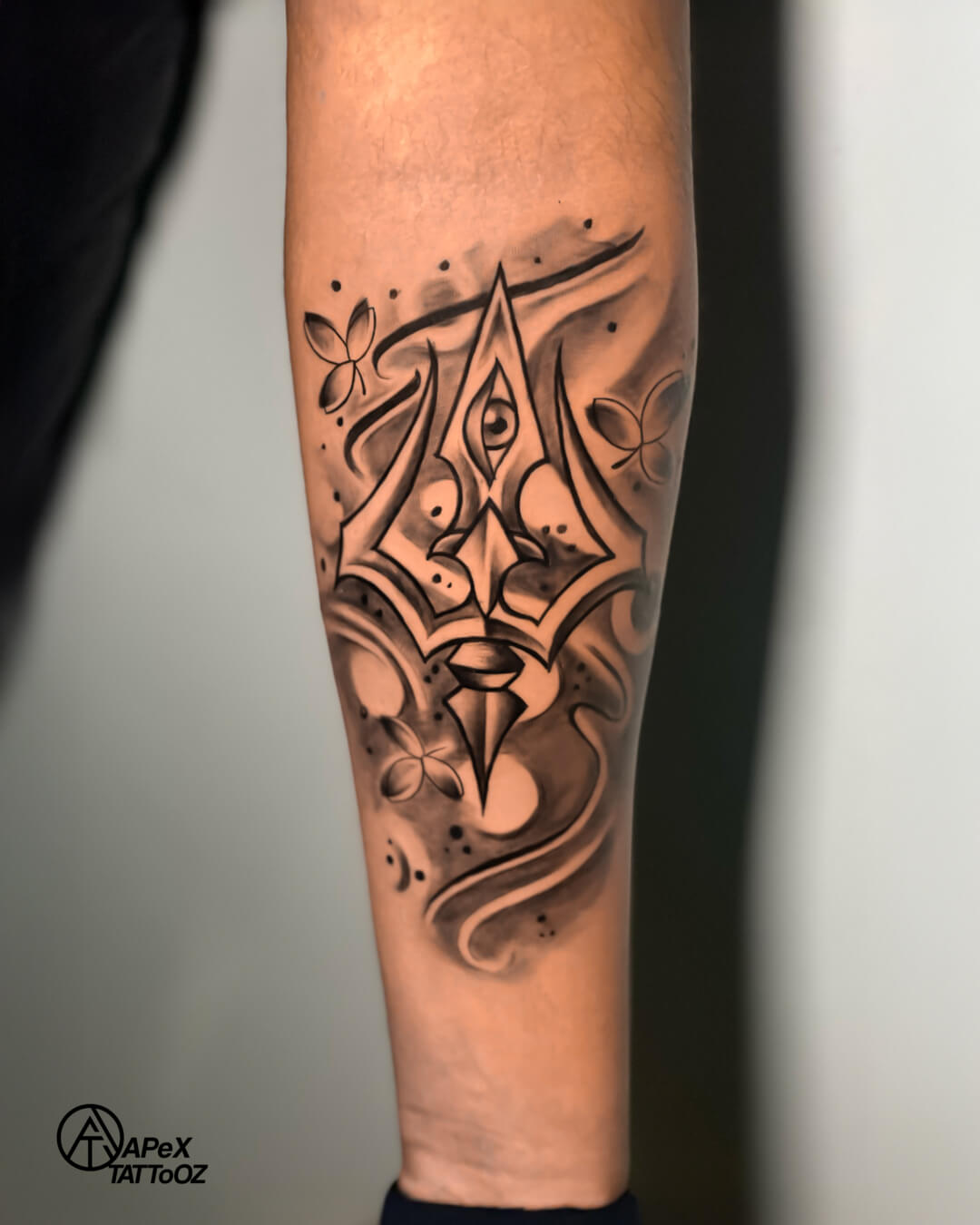
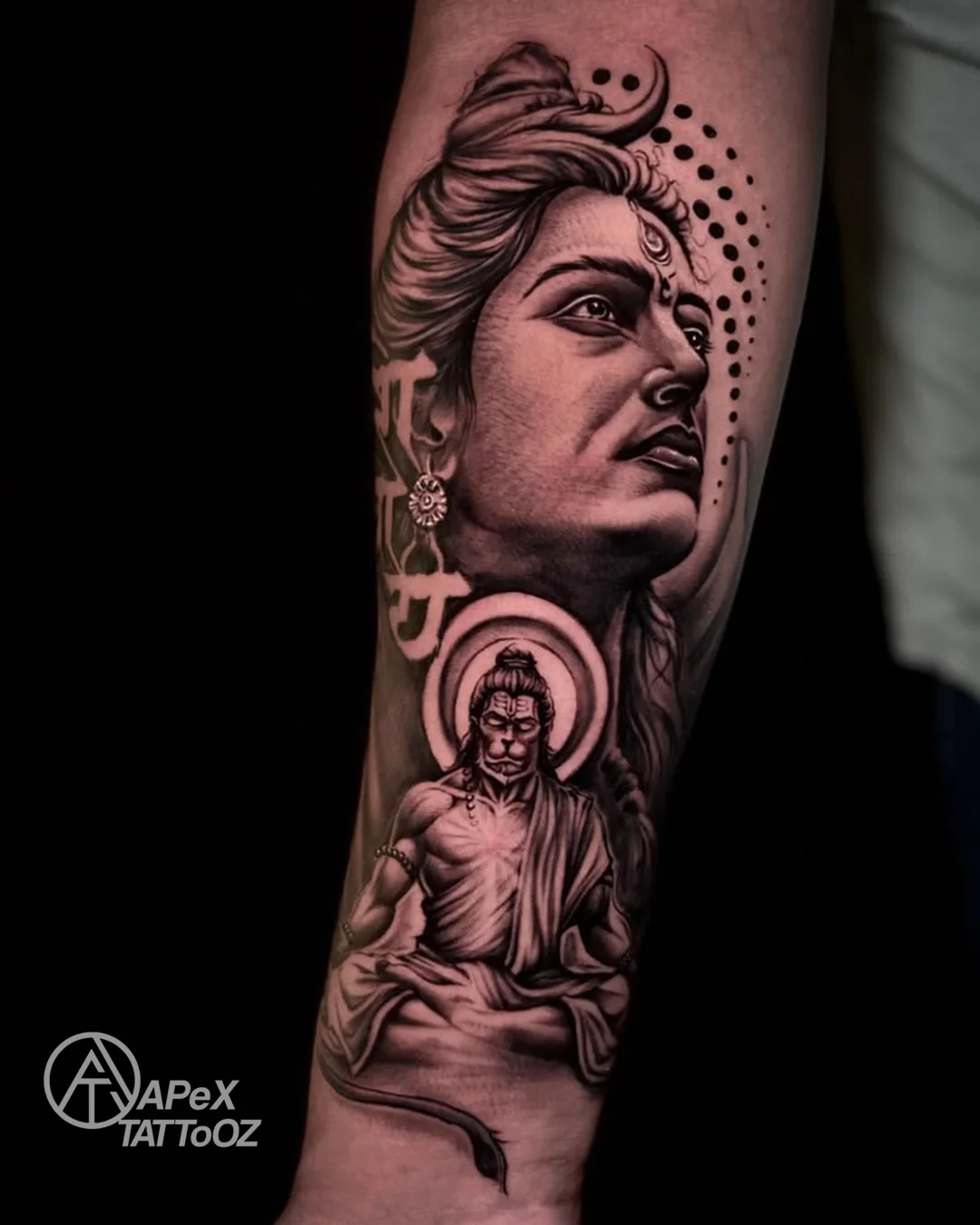
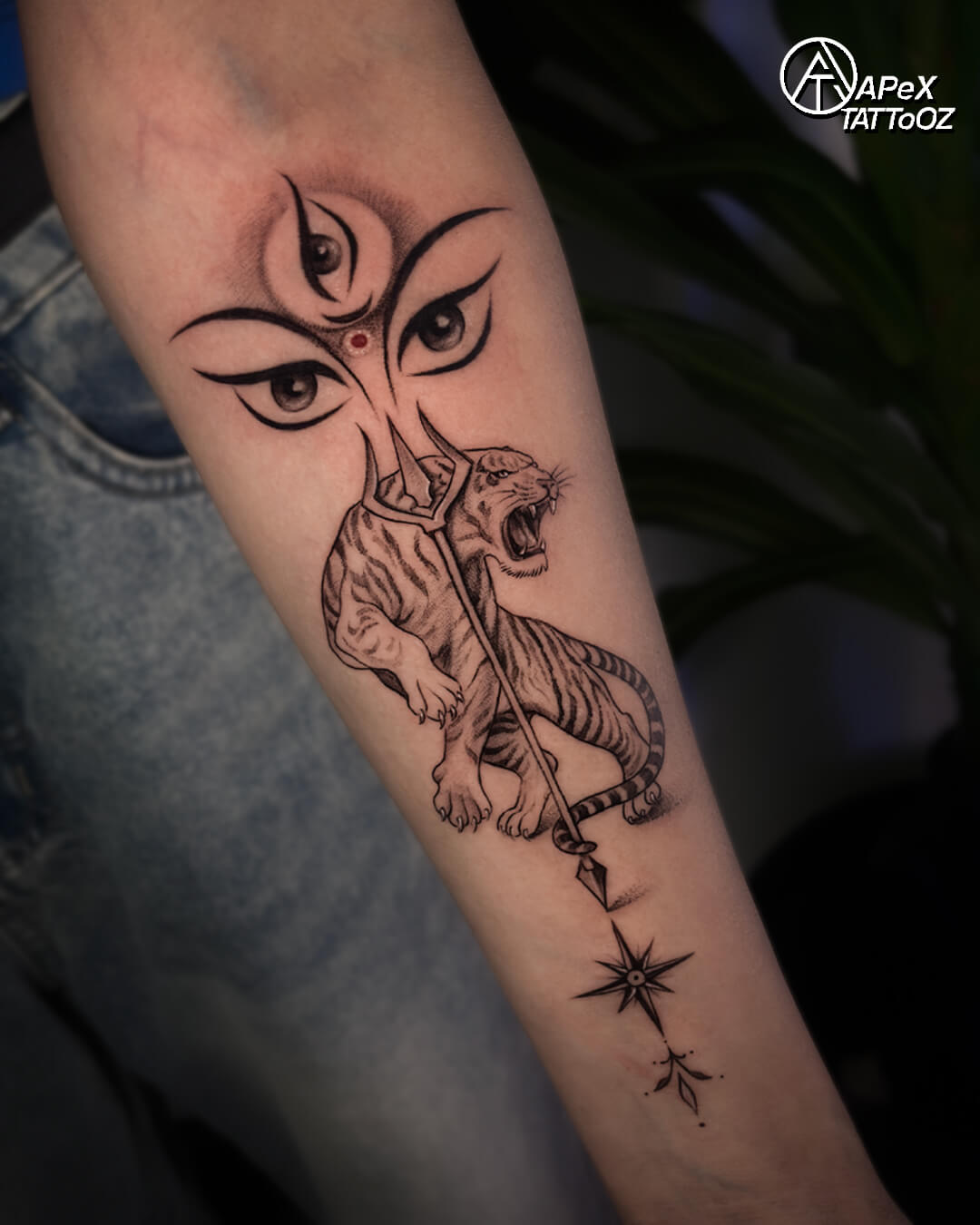
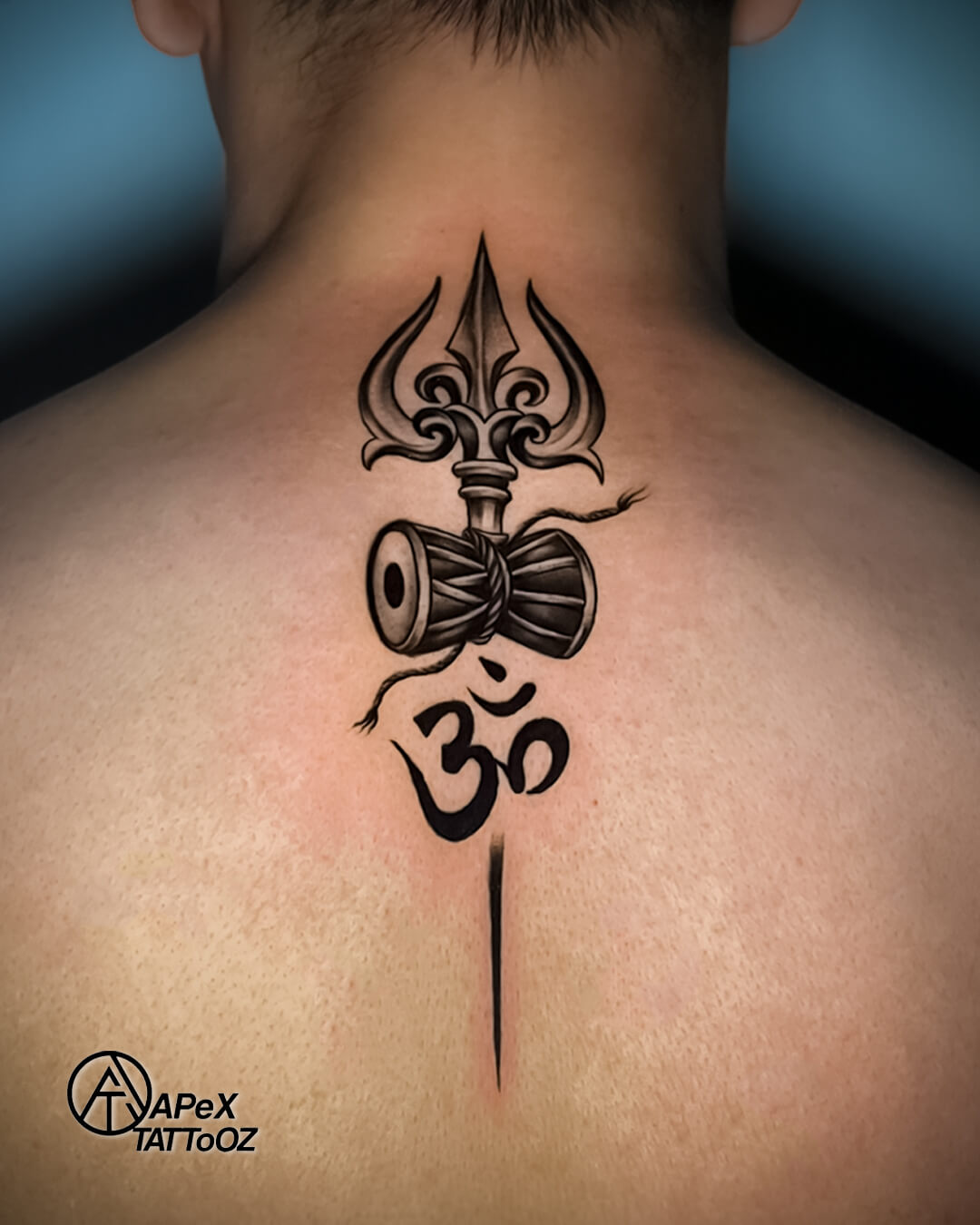
These are different levels of composition, not different sizes of the same tattoo. A Trishul-led idea can keep a recognisable outline central. A portrait-and-figure arrangement also needs room for expression, posture and the relationship between the two subjects.
Choose the depiction that matters to you before adding more symbols. For closer subject comparisons, explore the Trishul design guide or the Shiva tattoo portfolio. Keep any important religious wording or attributes clear in your reference brief.
A face alone, or a face with lettering?
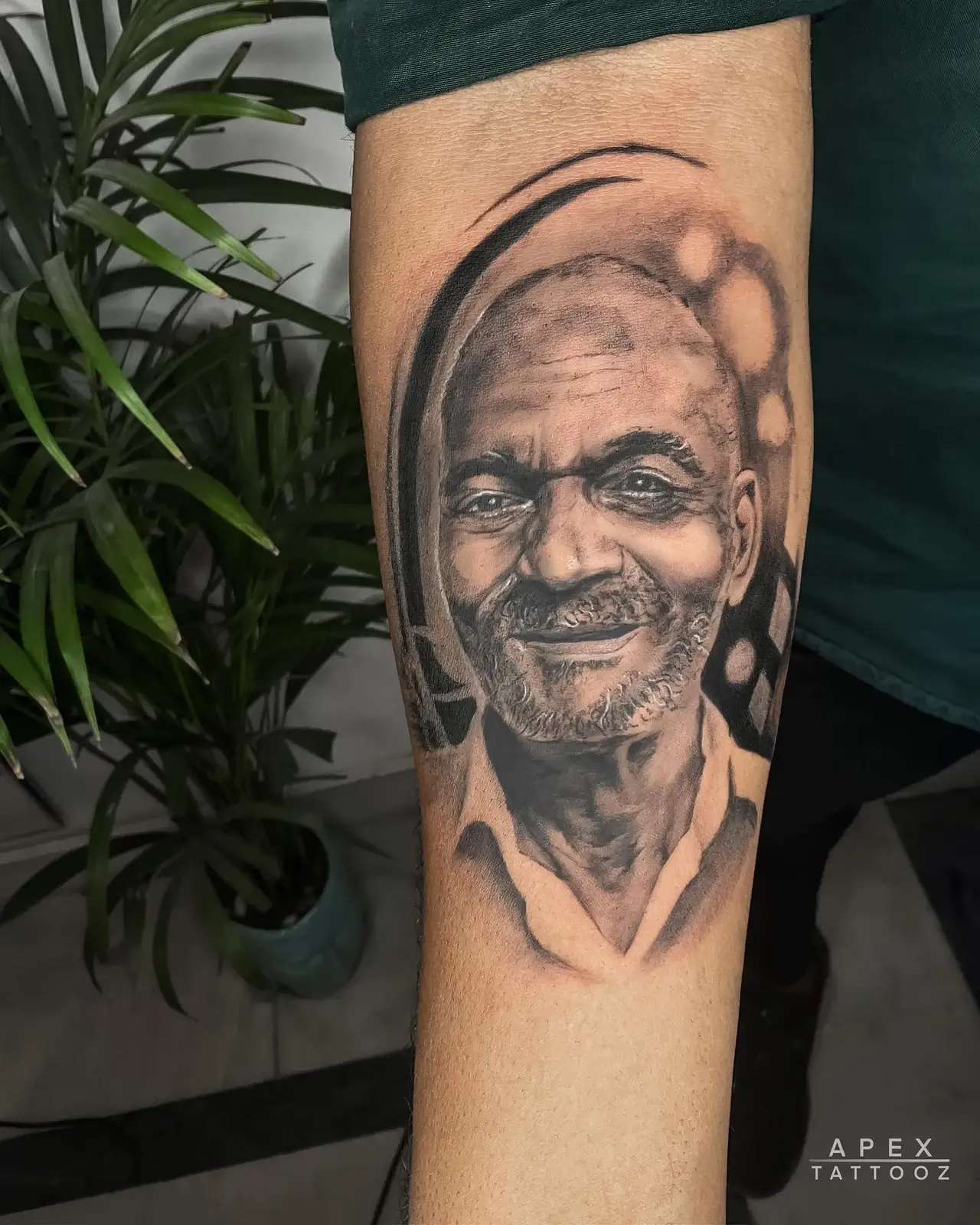
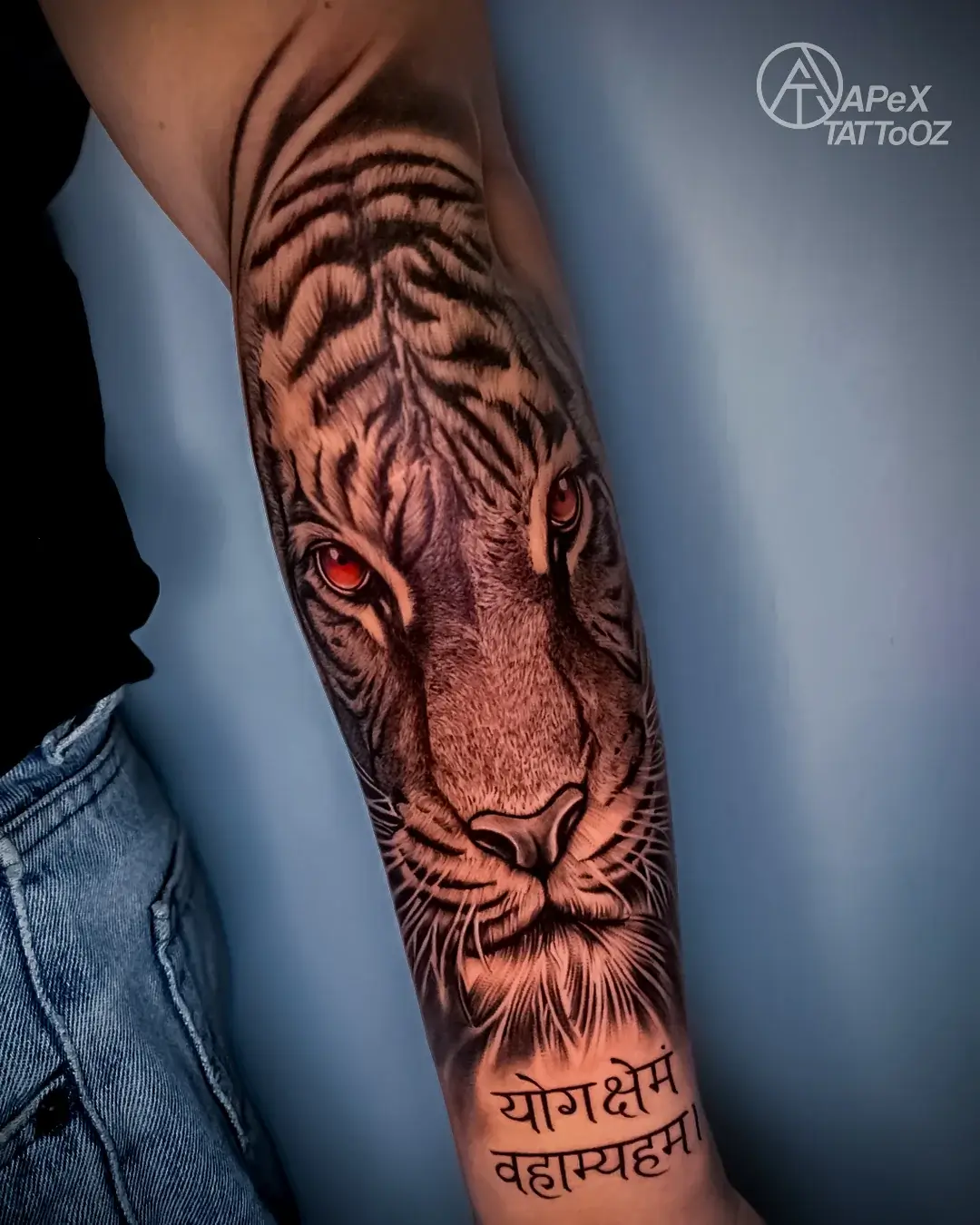
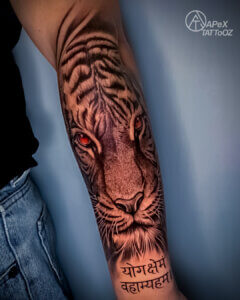
The difference to notice is where the image ends. Do you want a portrait to stand alone with clear skin below, or do you already know you want words, a date or another element nearer the wrist? Decide that before giving all the available length to the face.
If you are planning a loved one’s portrait, start with the expression you want to preserve and a clear reference photograph. The Apex portrait portfolio shows more approaches. For an animal-led direction, the tiger forearm story examines that particular composition in more detail.
More forearm ideas from our studio
Maybe you are drawn to something more layered: fabric, petals, a vivid face or a pattern that changes as your arm turns. These six pieces give you more directions to explore. Look for the detail that catches your eye, then look at the shape of the whole tattoo.
Layered shading or a touch of red?
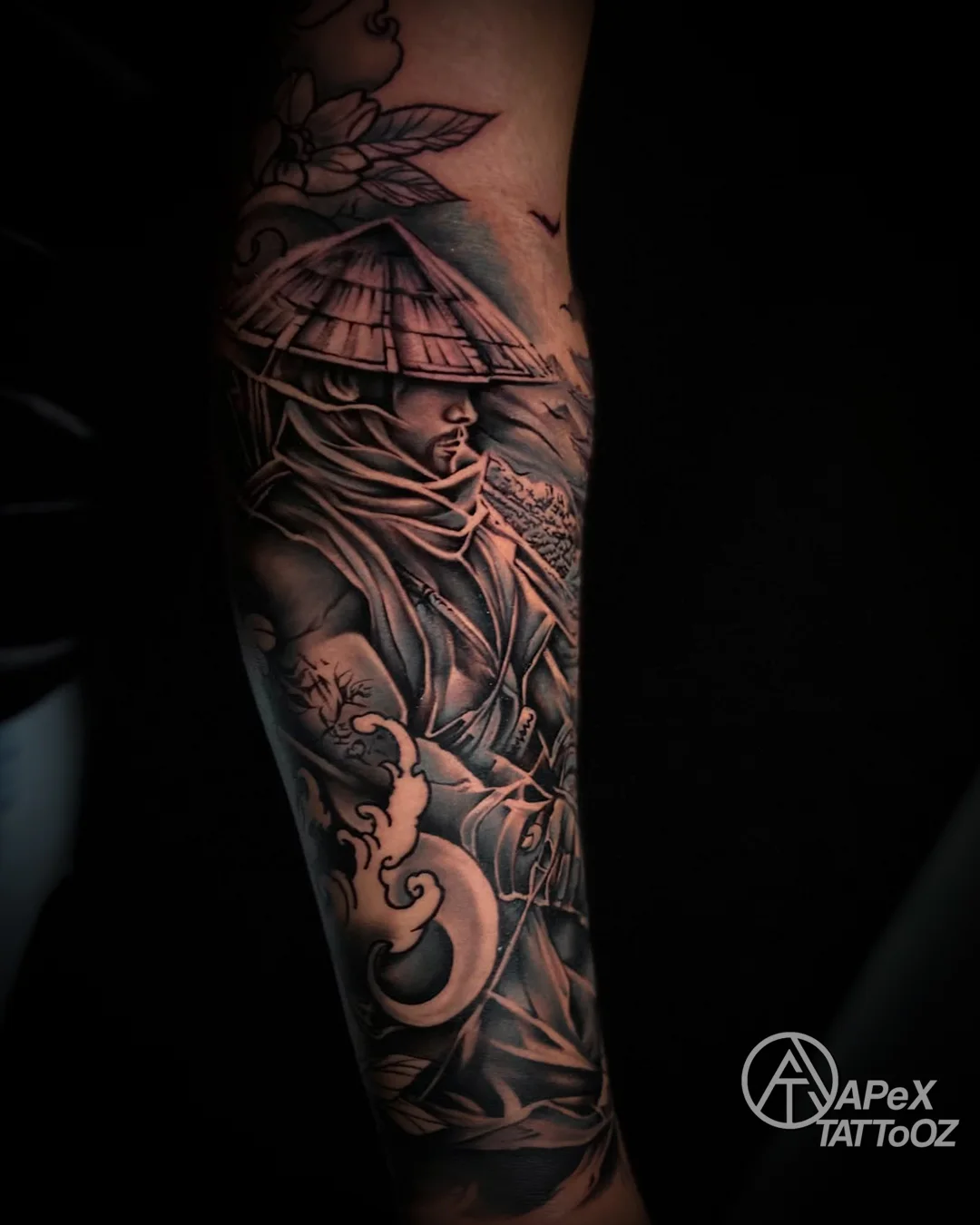

If both appeal to you, notice what each uses to separate its forms. The samurai relies on differences between light and dark; the illustrated portrait also uses red to pull particular details forward. Choose which effect you want people to notice before collecting more references.
Flowing flowers or sharper geometry?

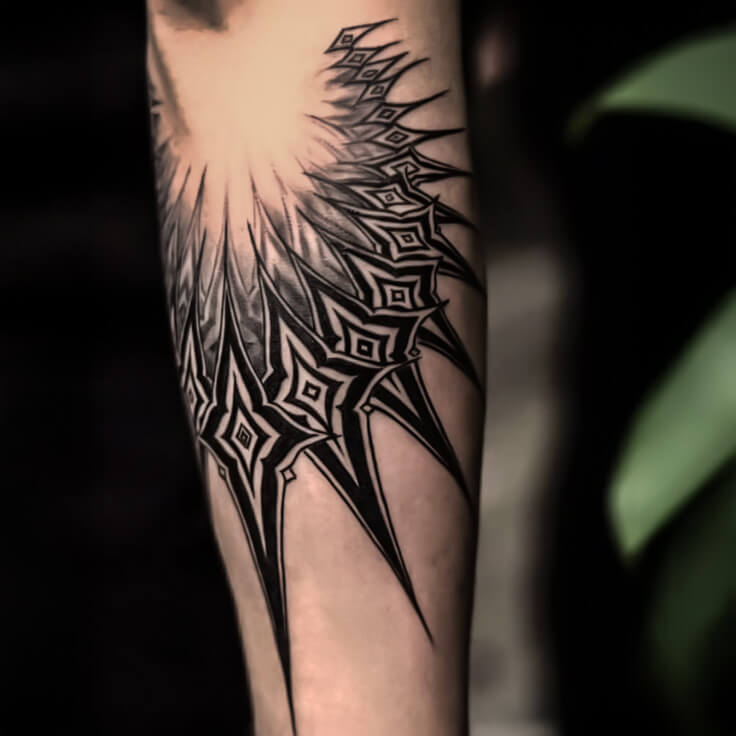
Follow the outer boundary with your eye. Rounded petals and long angular points produce very different silhouettes, even in the same black-and-grey palette. Decide whether that boundary should feel soft, sharply patterned or deliberately mixed.
Connected realism or separate visual chapters?
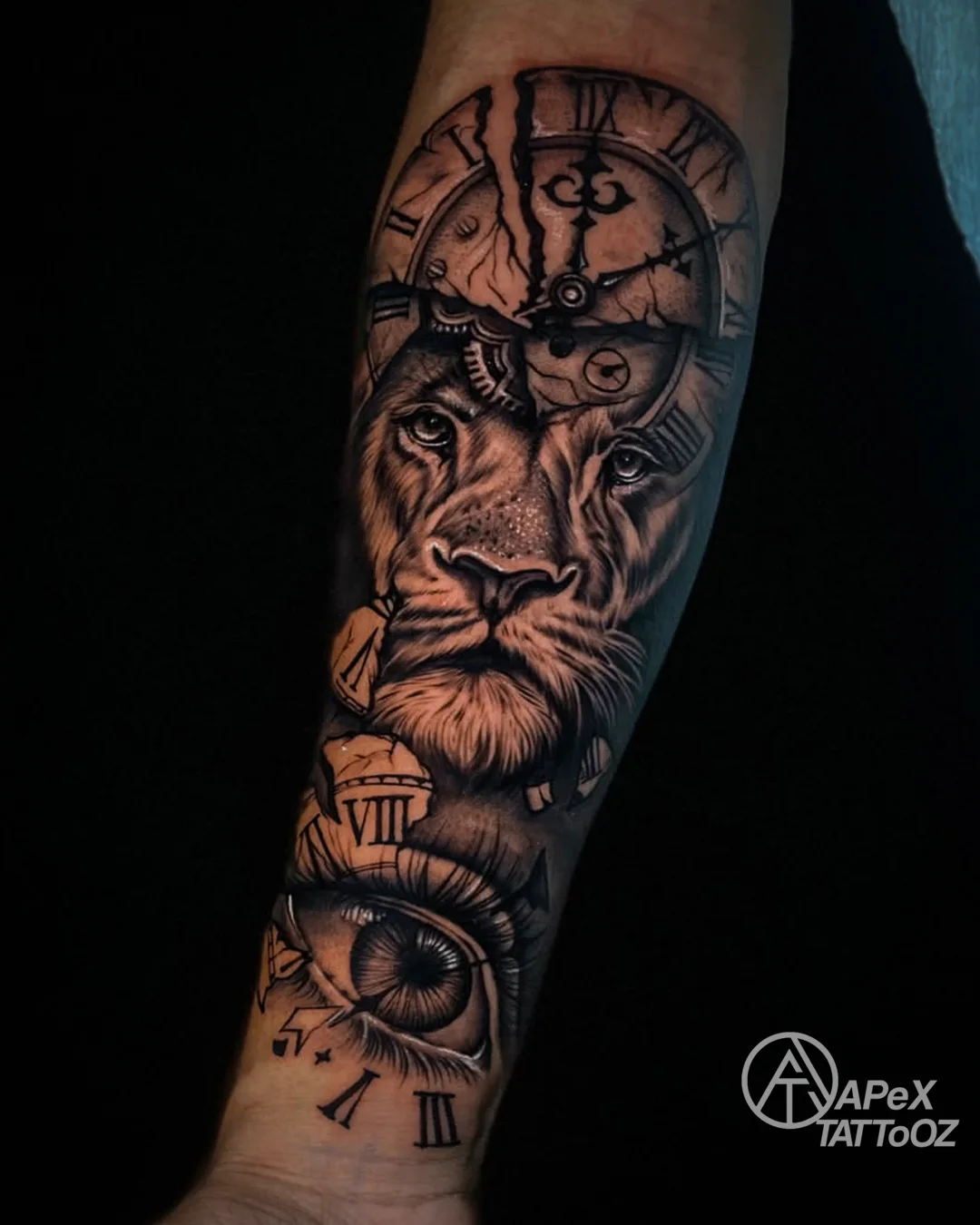
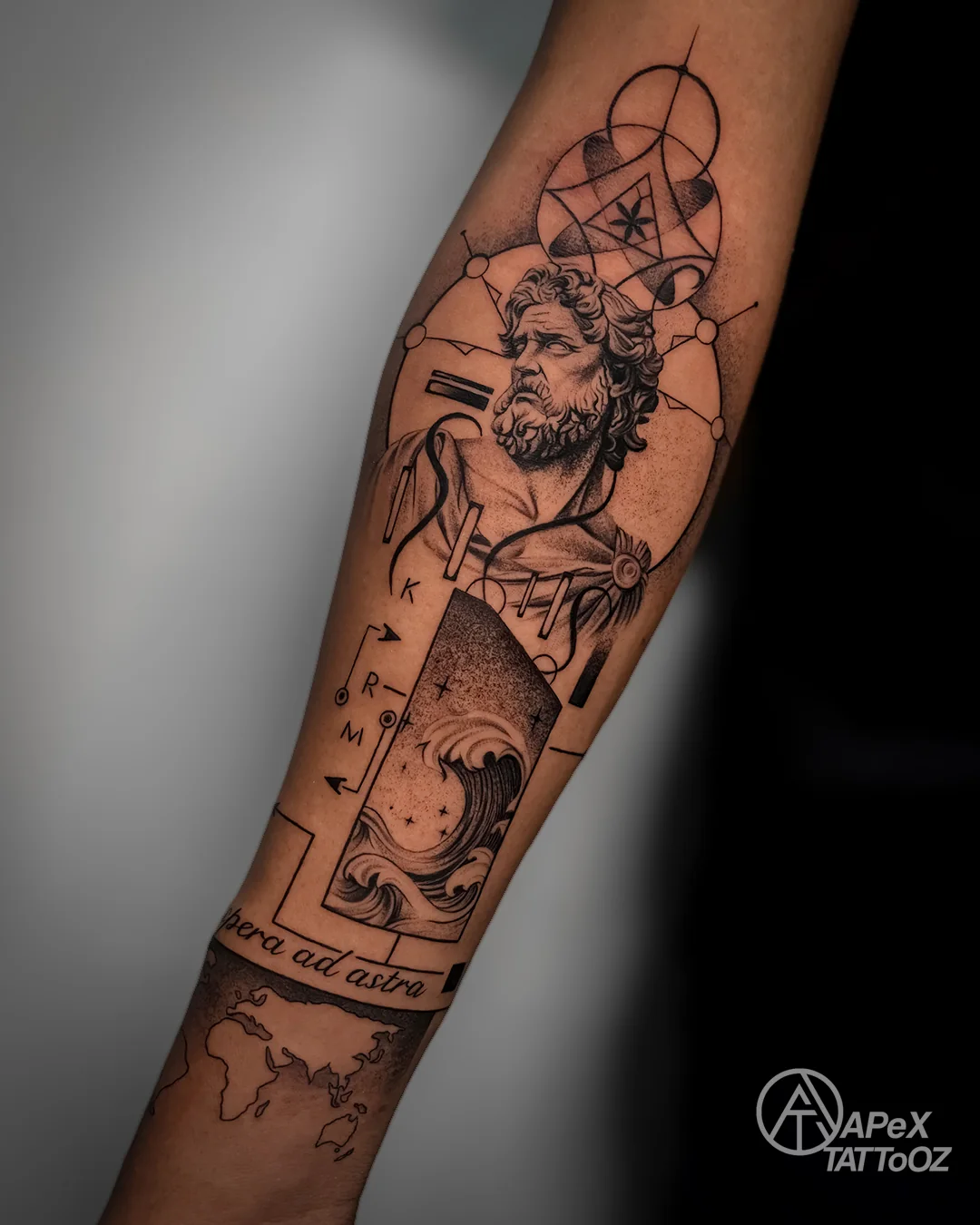
Both combine several ideas. The useful choice is whether you want them to read as one shaded picture or as distinct elements joined by linework. Pick a main subject first, then decide what the supporting elements should contribute.
Inner forearm, outer forearm or wrapping around?
Turn your hand palm-up, then let your arm hang comfortably by your side. Finally, turn it so the back of your hand faces forward. Notice which part of your forearm you can see in each position. A photograph taken with an arm carefully rotated only shows one of those views.
- Inner forearm: consider how the design reads when you look down with your palm turned up, and how much is visible when your arm rests. It does not have to be restricted to small or delicate work.
- Outer forearm: consider the view with your arm relaxed, especially where a face or central symbol sits. Check that the feature you care about does not disappear around the side from your preferred viewing angle.
- A wraparound composition: expect different parts to become visible as the arm turns. Decide which subject should lead in each view instead of expecting the entire tattoo to look like one flat photograph.
For lettering, also decide whether the intended reading direction is towards you or towards someone facing you. Check the actual wording directly; a mirror reverses it. The stencil placement guide explains the review to make before tattooing begins.
There is no separate design rule that makes a forearm tattoo right for men or women. Your arm, preferred coverage and chosen artwork are the useful starting points. A bold portrait, fine-line composition or devotional piece can be discussed on that basis.
What if you want to build towards a sleeve?
A tattoo covering one visible side of the forearm is not proof of a complete sleeve. If you hope to add more later, show the artist the inner, outer and side views, including any existing tattoos. Explain whether the wrist and elbow areas should stay clear or be available for future work.
The examples here help you choose a starting direction. They do not document a completed sleeve or a before-and-after transformation. For more angles of the classical composition shown above, see the Greek-inspired forearm story.
How much does a forearm tattoo cost?
A forearm is a location, not a fixed tattoo size. A small symbol, an open linework composition and a detailed piece covering most of the forearm need different estimates. The subject name alone cannot tell you the price.
Measure the approximate height and width you want to use, then consider the complexity of that particular drawing. For example, an intended area 6 inches high and 2 inches wide is a 12-square-inch rectangle, not a 6-square-inch tattoo. That is a measurement example, not a quote or the dimensions of any work pictured here.
Use the current Apex tattoo price calculator for an initial estimate, including the starting charge shown there, and share the reference for an individual assessment. The tattoo measurement guide explains height, width and area. None of these portfolio photographs is a fixed-price offer.
Turn your favourite photo into your own brief
Save the photograph that best matches the coverage you want, then describe the part you would change. You might like the open space of the linework example but want only one subject; you might prefer the long dragon arrangement but want a different lower boundary. That is a much clearer starting point than asking for every detail from several unrelated pictures.
A useful example: “I like the open linework direction. I want it on the inside of my forearm, with clear skin near my wrist. The main symbol matters most; I do not want a dark background. Here is the area I am considering.”
Bring that preference and your reference to an Apex Tattooz consultation in Delhi. You do not need to arrive with a finished drawing. Knowing the amount of coverage, the main subject and the view that matters to you gives the design a considered beginning.