You do not need to arrive with a finished cover-up design. The most useful first step is showing the tattoo you already have clearly. A dark selfie, a filtered close-up or an old photograph can leave out the very details an artist needs to discuss your options.
This guide explains which photos to send for a tattoo cover-up consultation at Apex Tattooz in Delhi. It is a preparation checklist, not a promise that a particular tattoo can be covered. For the service itself, start with our tattoo cover-up consultation page.
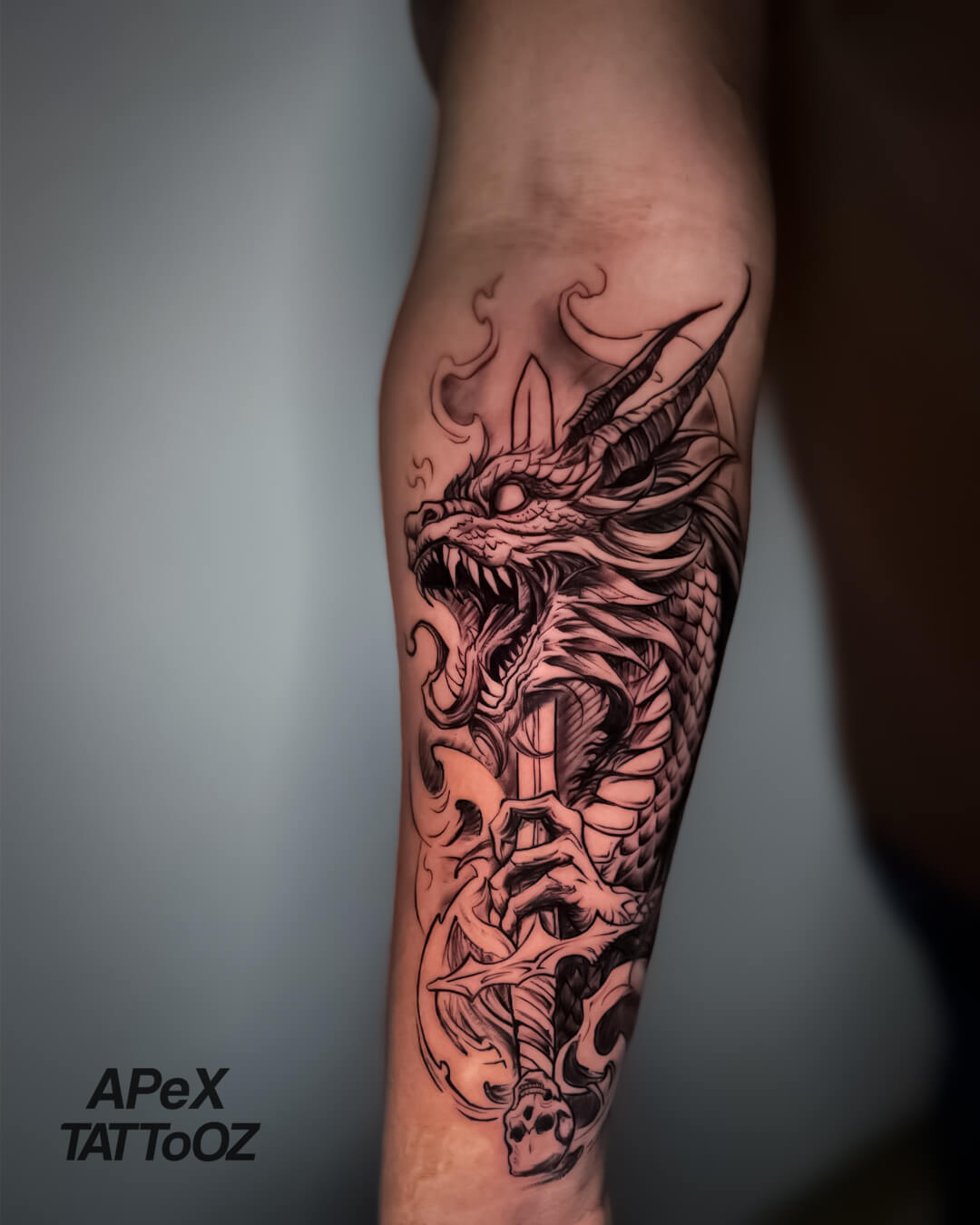
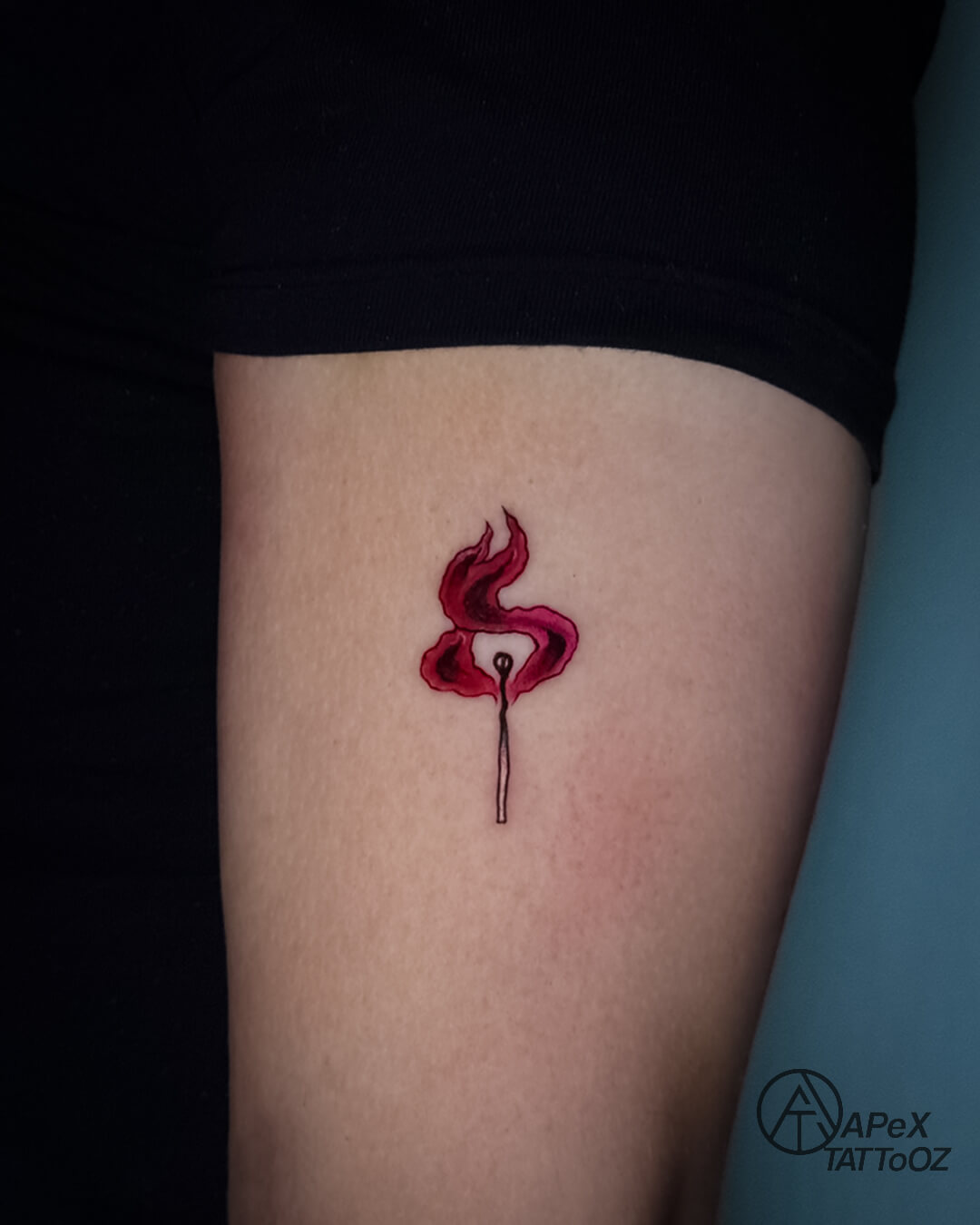
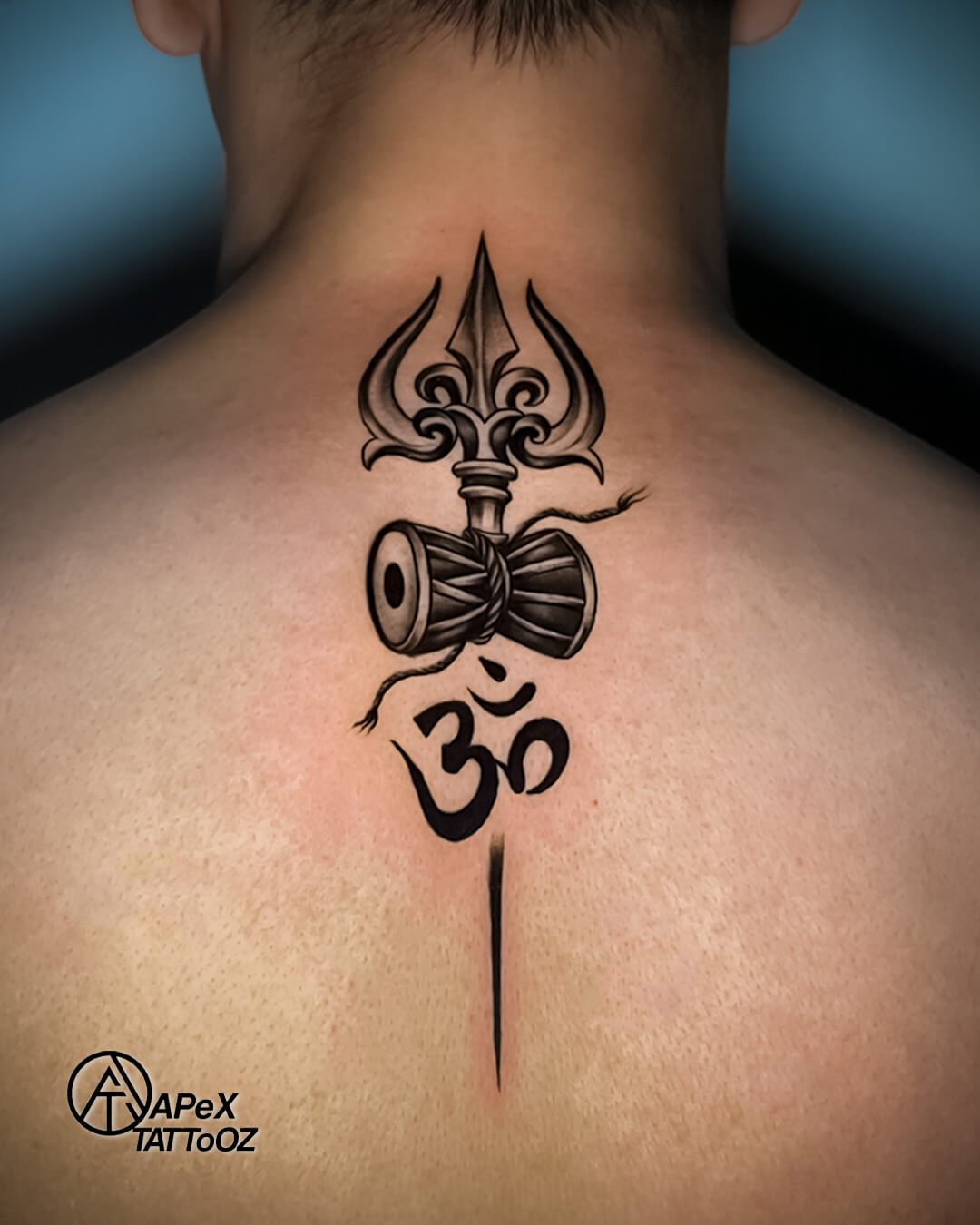
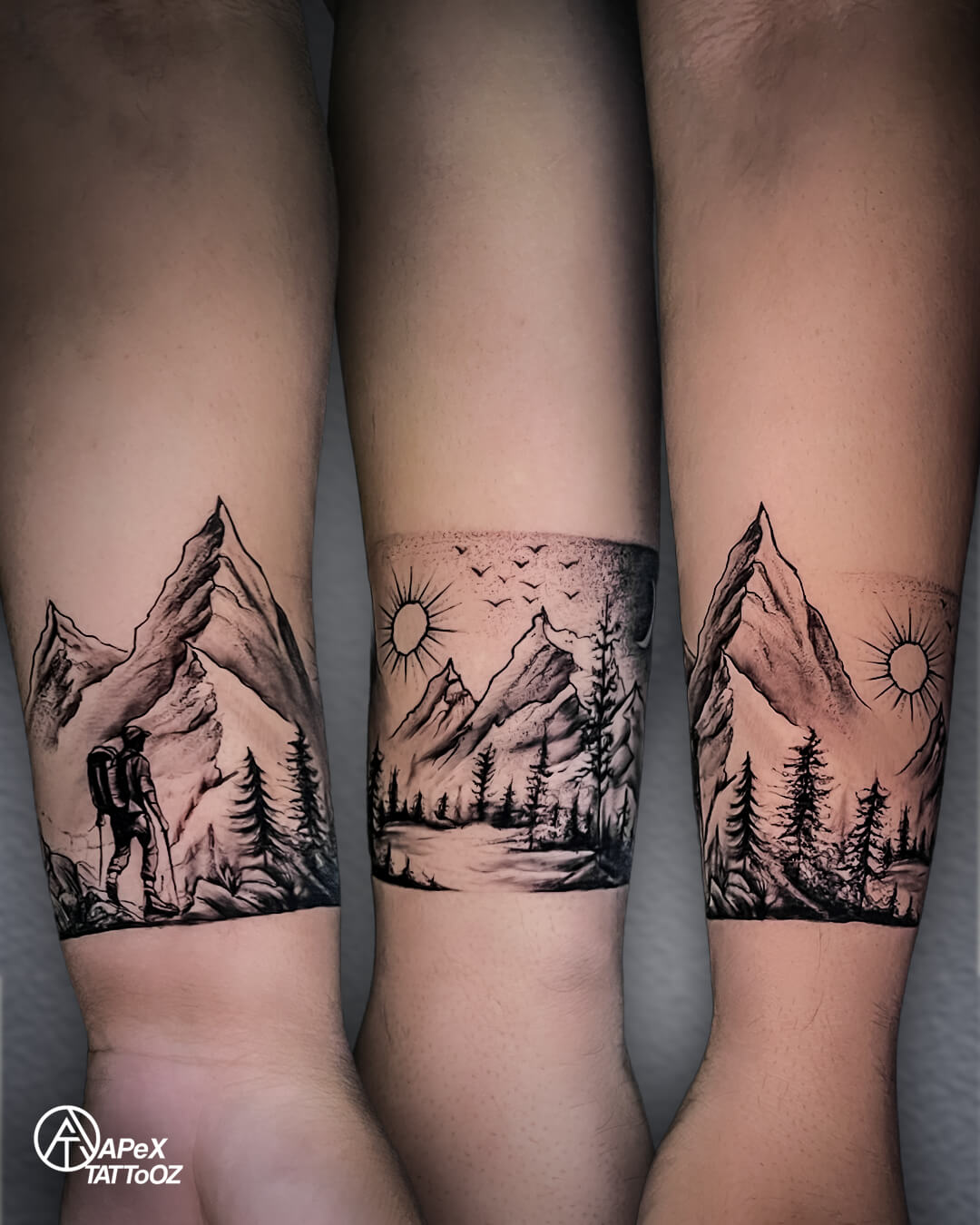
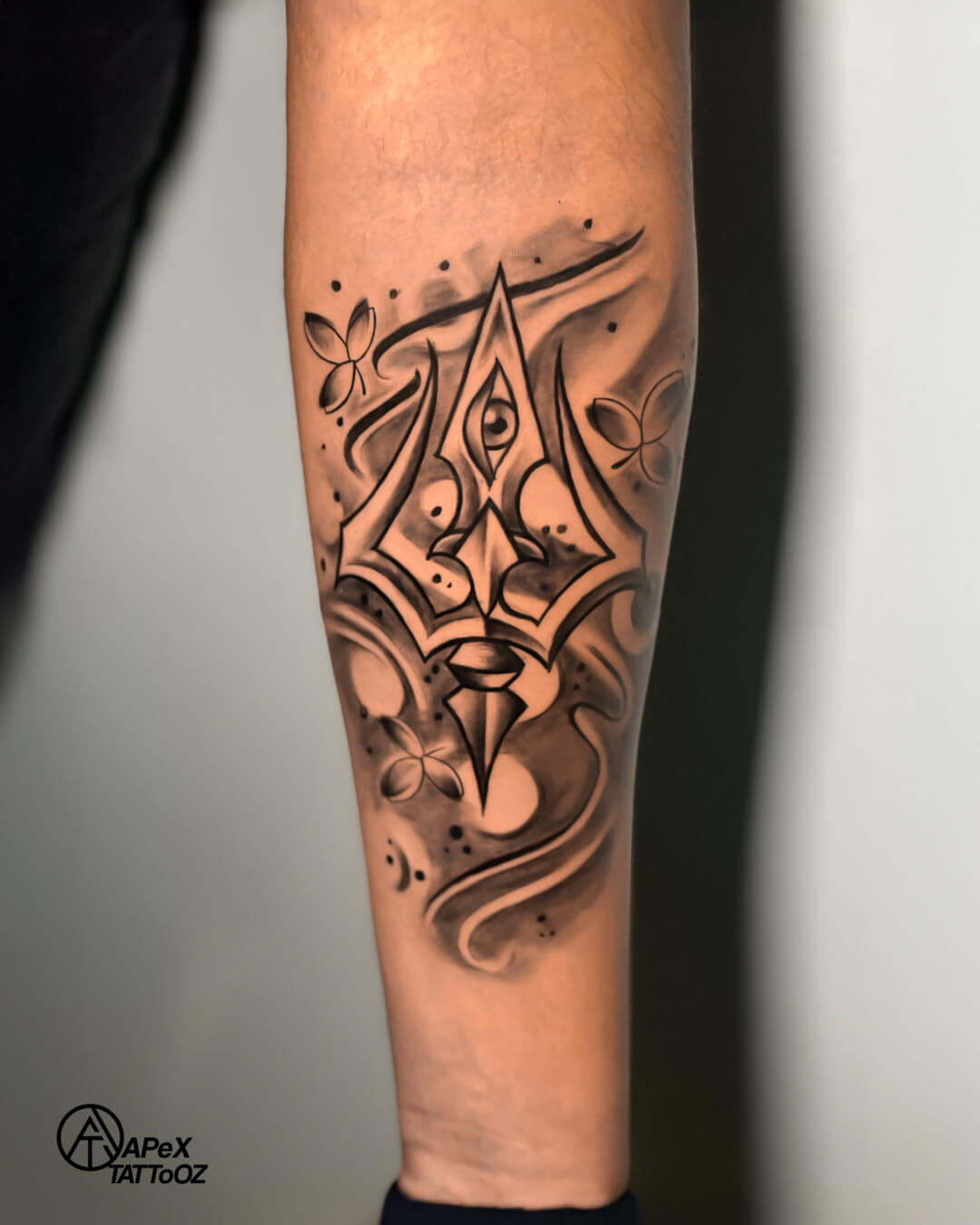
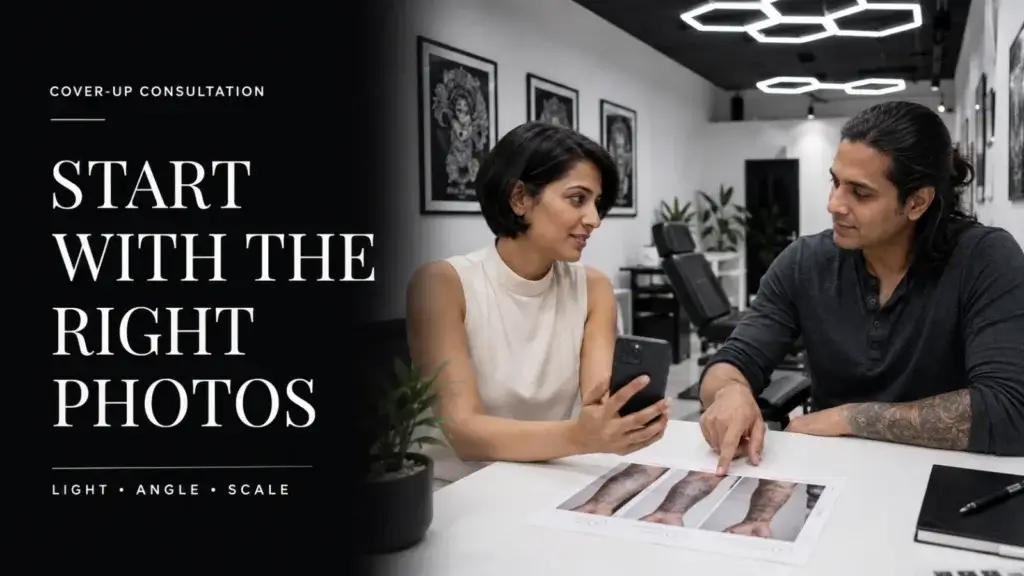
The cover is an AI-generated educational illustration, not a photograph of an actual client or completed Apex work. The portfolio photograph below shows real Apex Tattooz work.
The three photos that make a better starting point
- A straight-on view: include the complete tattoo and a little surrounding skin. Keep the camera facing the area rather than taking an extreme angle.
- A wider placement view: show where the tattoo sits on the arm, leg or other body area. The available space around it matters as much as the existing outline.
- A clear detail view: show the darkest sections and any lettering or dense outlines. Move the camera close enough to focus; avoid digital zoom that only enlarges blur.
If the tattoo wraps around your arm, add views from the other sides. One flat image cannot show the whole curved surface. You can ask someone you trust to help take the photos, or choose an in-person consultation instead.
Use honest light, not a beauty filter
Soft daylight is a useful starting point. Avoid coloured room lighting, heavy glare and deep shadows. Check the photograph before sending it: can you see both the darker and lighter areas? If a bright reflection hides part of the design, change the angle of the light and take another shot.
Send an original, recent file where possible. Do not lighten the old ink, smooth the skin, apply a colour filter or use AI to reconstruct details. A photograph that makes the tattoo look better is not necessarily a photograph that helps assess it.
Include dimensions and your boundaries
Write the approximate height and width, with units, alongside the photos. Our tattoo measurement guide explains how to describe the space. Do not estimate dimensions from someone else’s tattoo photograph.
Tell us whether you are open to a larger design, darker areas or colour. Also explain what you do not want. “I am happy to extend above the current tattoo, but not below the wrist” is more useful than “anything that covers it.” You do not have to accept a style you dislike simply because it appears in a cover-up example.
Send inspiration separately from the existing tattoo
Label the images so the studio can distinguish your current tattoo from a design reference. Choose a small number of references and explain the part you like: the subject, the shape, the movement or the use of colour. A downloaded design is inspiration, not proof that the same result will work over your ink.
A real Apex example—not a guarantee for your tattoo
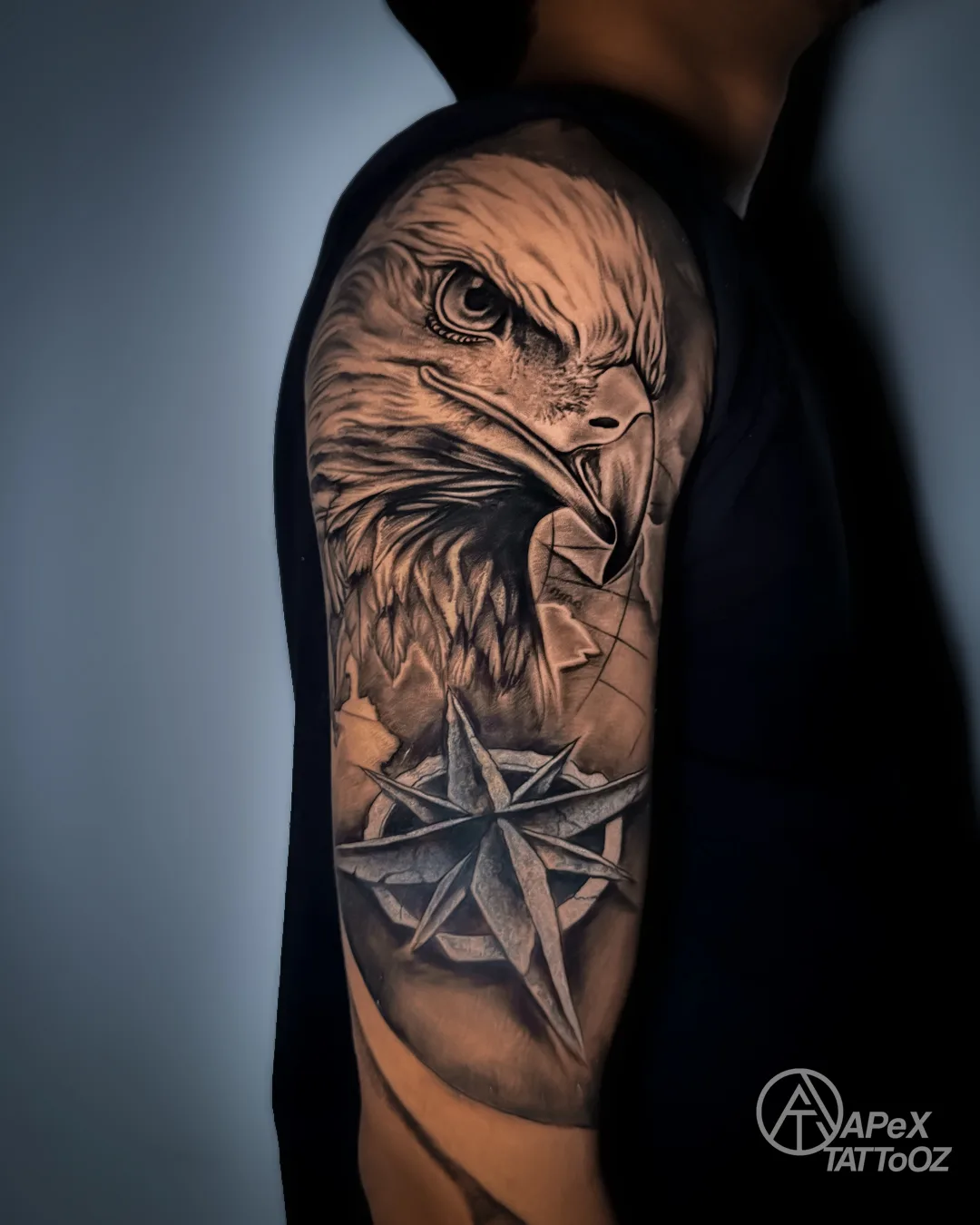
Look at the overall composition rather than treating a portfolio photograph as a template to copy. Your existing tattoo’s position, shape and dark areas may require a different arrangement.
What photographs cannot settle
Photos help begin the conversation; they cannot guarantee feasibility, the final design or a final quote. An in-person assessment may still be needed. Tell the artist about previous reworking or removal treatment rather than expecting a photograph to explain that history.
Ask what can realistically be changed, what may remain visible and which design compromises are involved. Get the proposed size and scope clear before comparing prices. Our Delhi tattoo pricing page is a starting point for a budget discussion, not a cover-up quote for an unseen tattoo.
A message you can adapt
“I would like to discuss covering this tattoo on my outer upper arm. It is approximately ___ cm tall and ___ cm wide. I have attached a full view, a placement view and a detail photo. I like ___, would prefer to avoid ___, and am open to ___. Could we discuss suitable options and an appointment?”
Share only the body area needed. Avoid including faces, documents or other identifying details unnecessarily. If the placement feels private, ask to discuss it at the studio instead.
Start with clarity, not pressure
You deserve to understand the options before committing to another permanent design. Bring honest photos, your preferences and your questions. Find Apex Tattooz in Delhi and plan a consultation; we can work through the brief together.