You can recognise your pet from a familiar head tilt, a particular gaze or the way their ears sit when they are listening. Those details are why choosing pet portrait tattoo reference photos is more personal than selecting the sharpest image in your camera roll.
Start with the expression you love, then check whether the photograph gives the artist enough information to understand it. This guide focuses on dogs, cats and their distinctive features; our broader portrait tattoo from a photo guide covers general portrait planning.
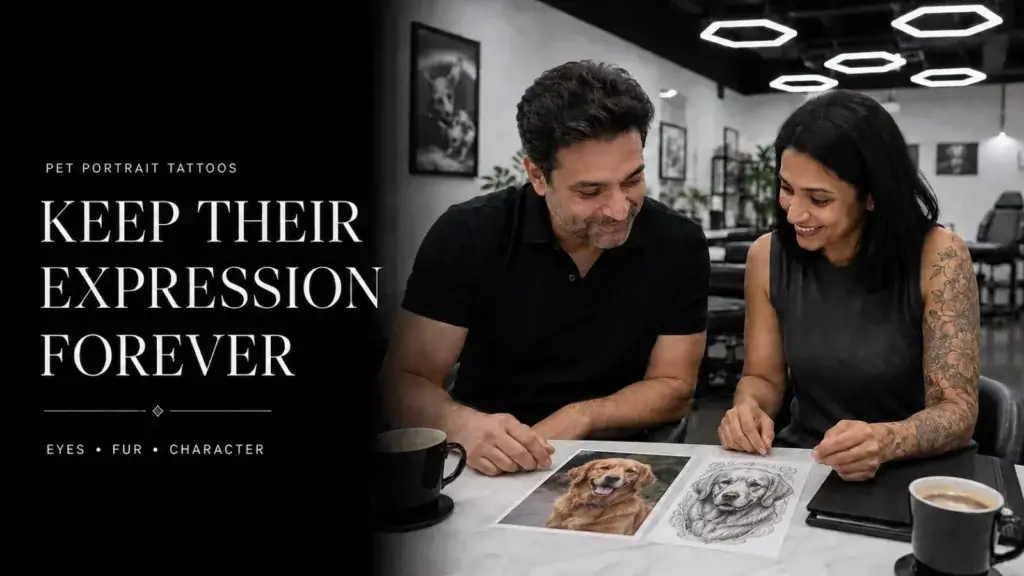
The cover is an AI-generated educational illustration. The dog tattoo below is real Apex Tattooz portfolio work. No client story or memorial circumstance is implied.
Choose one photograph as the emotional starting point
Look through your photos without judging the background first. Which expression feels most like the animal you know? It might be an alert look, a relaxed open mouth or a quiet side profile. Write down the feature you would most miss if it changed.
Then identify one primary reference. Supporting images can clarify markings or an ear hidden in the main picture, but they should not accidentally replace its expression. Tell the artist which image establishes the pose and which are there only to explain details.
Check eyes, muzzle and ears together
A pet’s likeness is more than eye colour. Compare the distance between the eyes, the length of the muzzle, the shape of the nose and the position of the ears. Very close phone photographs can make the nose appear much larger than the rest of the head. That may be a lovely playful photo, but it is worth discussing before using it as a portrait reference.
A photograph near the animal’s eye level can be a useful comparison when your favourite was taken from above. Do not force a new pose simply to get a technically tidy picture. If several existing images show the features clearly, bring those instead.
Look for detail in dark and light fur
Check whether black fur has become a single dark patch or white fur has lost its edges in bright light. You do not need a flat, shadowless photo, but the artist needs to distinguish the face from its surroundings.
- Send the original file where possible, rather than a screenshot.
- Include a separate view if a distinctive patch is hidden.
- Avoid filters that change eye colour, markings or the shape of the face.
- Keep an unedited original if you also have an enhanced version.
Do not let an AI enhancement invent fur, whiskers or eye detail and become the only source. Missing information should be discussed honestly.
A real portrait example: expression before decoration
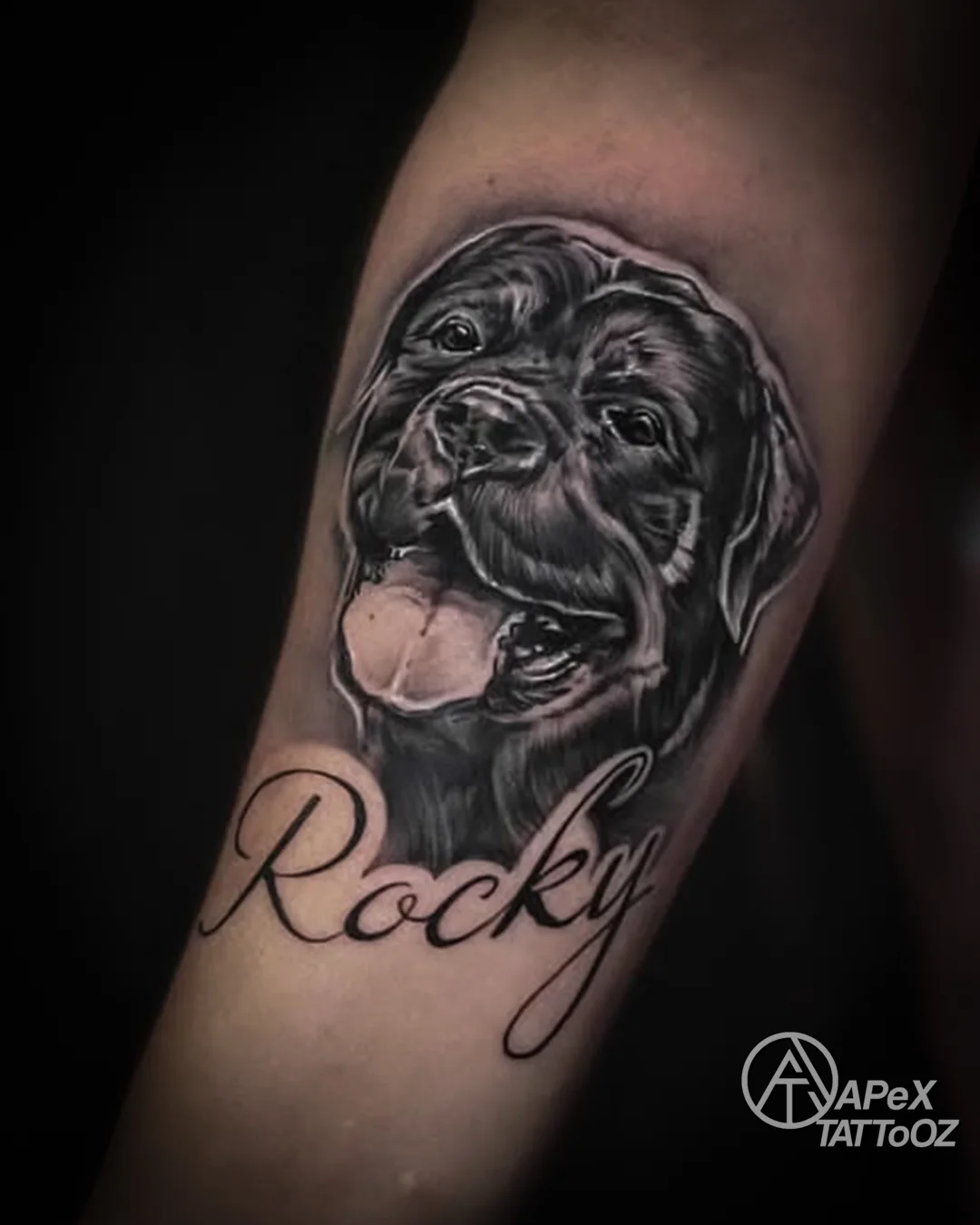
The gaze, nose and open mouth give this portrait a recognisable expression. The lettering sits beneath the face rather than across it. For your own design, decide whether a name belongs in the main composition, beside it or nowhere at all. A portrait does not need extra symbols to be personal.
Decide what must survive when the design is simplified
A tattoo cannot be judged only at the size of an enlarged screen image. Tell the artist your preferred body area and approximate dimensions. Ask which features need room and which background details could be removed.
For example, a collar may matter to you while the sofa behind your pet does not. A specific ear shape may be more important than rendering every strand of fur. This is a conversation about priorities, not permission to change the animal’s identity.
Use the tattoo measurement guide to describe the area. For tonal planning, the black-and-grey realism guide explains why a clear focal point and contrast matter.
What if the favourite photograph is not clear?
Bring it anyway, alongside any originals or supporting views you have. Explain what makes it special. The consultation can then distinguish the expression you want from details the image does not reliably show. Do not accept a promise of an exact likeness based solely on a tiny, blurred file.
If there is not enough information, consider whether another photograph, a simpler interpretation or a different composition still feels right. You are allowed to take time over that decision.
Bring the animal’s character into the consultation
Prepare the primary photo, a few useful supporting views, a note about the expression or markings you love, preferred placement and any proposed name or date. Keep unrelated private photographs out of the material you send.
Book a pet portrait consultation with Apex Tattooz in Delhi. We want the brief to describe your pet—not just a breed, a generic portrait or a collection of decorative details.